
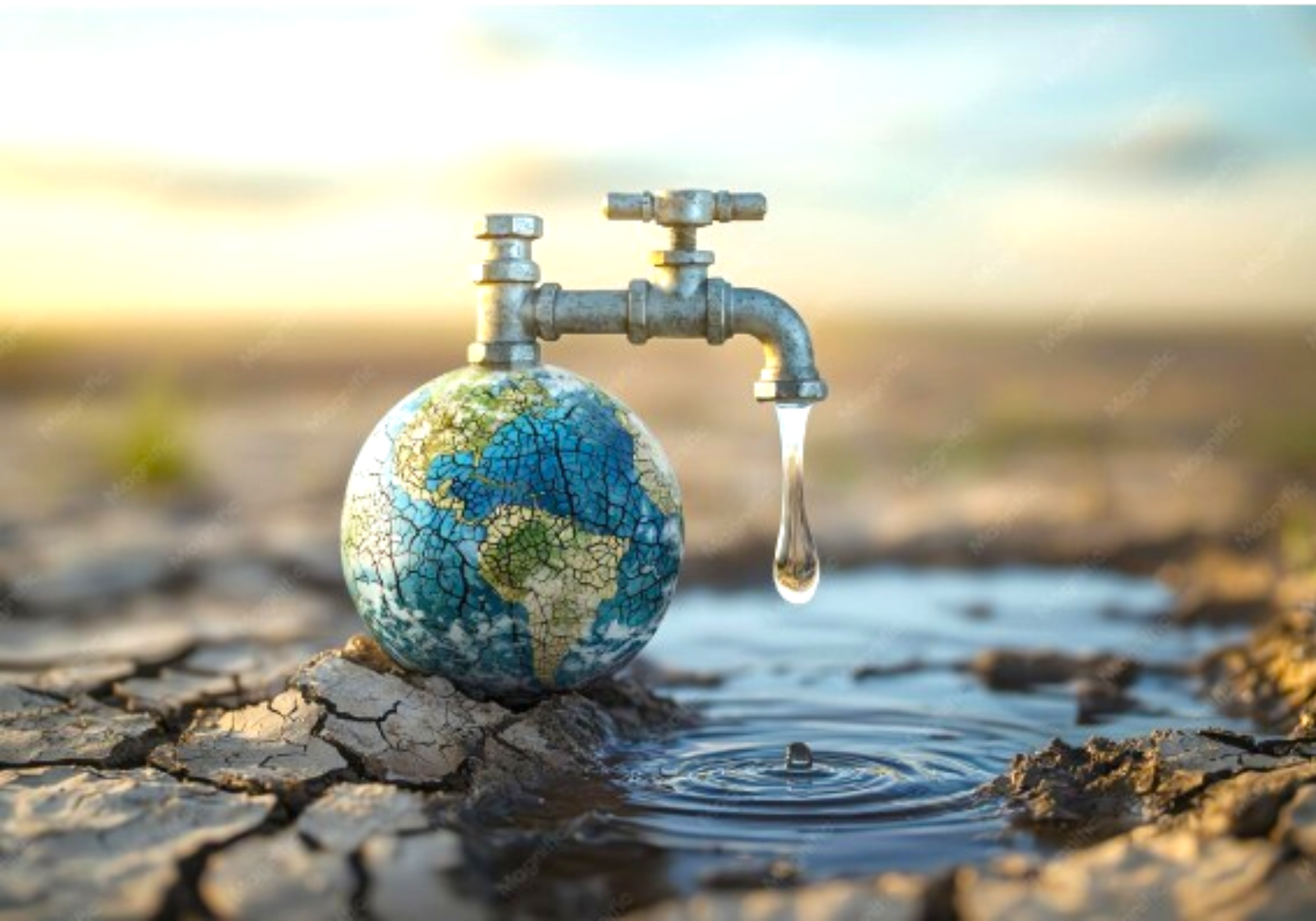
Turn on your tap. Water flows out, clean and clear, as predictable as sunrise. Now imagine turning that tap tomorrow and nothing comes out. Not a drop. For billions of people around the world, this isn’t imagination, it’s reality. We’re facing a global water crisis so severe that the United Nations has stopped calling it a “crisis” and started calling it “water bankruptcy.” And unlike financial bankruptcy, this one threatens human survival itself.
From Crisis to Bankruptcy: Understanding the Global Water Crisis
In January 2026, the UN declared we’ve entered an era of “global water bankruptcy”, a term that reflects something far more serious than the global water crisis terminology we’ve used for years. The difference? A crisis implies something temporary that can be fixed. Bankruptcy means we’ve depleted our water resources to the point where we can’t return to historical baselines. Ever.
The numbers are staggering. Only 3% of all water on Earth is freshwater. Of that tiny fraction, 2.5% is locked away in glaciers, ice caps, and underground aquifers we can’t easily access. That leaves just 0.5% of Earth’s total water, half of one percent, as accessible freshwater in lakes, rivers, wetlands, and shallow groundwater. And we’re draining it faster than nature can replenish it.
According to UN projections, freshwater demand will outstrip supply by 40% by 2030. That’s just four years away. We’re not approaching a tipping point, we’ve already passed it.
The Human Cost of the Global Water Crisis
The global water crisis isn’t an abstract environmental problem. It’s a human catastrophe already unfolding:
Over 2.2 billion people lack access to safely managed drinking water. That’s nearly one in four people globally who don’t have water they can reliably drink without getting sick.
Half the world’s population experiences severe water scarcity at least part of the year. Imagine your tap running dry every summer, not knowing if you’ll have enough water to drink, cook, or bathe.
700 million people are projected to be displaced by water scarcity stress by 2030. Climate refugees aren’t a future problem, they’re a present reality, and water shortage is a primary driver.
One in four children will live in regions with extreme water scarcity by 2040. The children born today will grow up in a world where water wars aren’t science fiction—they’re geopolitics.
These aren’t just statistics. These are farmers watching their crops wither. Mothers walking miles for water that might make their children sick. Communities fighting over rivers that are running dry. The global water crisis is creating poverty, disease, conflict, and mass migration on a scale we’ve never seen.
What’s Causing the Global Water Crisis?
The global water crisis isn’t caused by a single factor, it’s a perfect storm of human mismanagement and climate change:
Groundwater depletion: We’re pumping water from underground aquifers that took thousands of years to fill, and we’re doing it faster than rain can refill them. Major aquifers worldwide are being depleted at alarming rates. Once they’re gone, they’re essentially gone forever.
Agricultural demand: Farming consumes 70% of global freshwater withdrawals. We need water to grow food, but much of it is wasted through inefficient irrigation. In the Colorado River basin alone, 46% of direct water consumption goes to cattle feed. Globally, $700 billion in agricultural subsidies encourage wasteful water use.
Climate change: Rising temperatures are increasing droughts in frequency and severity. Glaciers that feed major rivers are melting away. Rainfall patterns are shifting, leaving some regions flooded while others face perpetual drought. Climate models consistently show expanding drought risk across vulnerable regions.
Population growth: More people means more demand for water—for drinking, farming, industry, and energy production. The global population continues to grow, but the amount of freshwater doesn’t.
Deforestation and wetland degradation: Forests and wetlands act like natural sponges, capturing and storing water. When we destroy them, we lose that water storage capacity. Wetlands are being drained, forests cleared, and with them goes our natural water infrastructure.
Pollution: Even where water exists, pollution often makes it unusable. Industrial waste, agricultural runoff, and inadequate sanitation contaminate water sources, reducing the already limited supply of safe water.
Where the Global Water Crisis Hits Hardest
The global water crisis doesn’t affect everyone equally. Some regions face catastrophic water stress:
The Middle East and North Africa are particularly vulnerable, with many countries already using more water than their renewable supplies. Countries like Jordan, Libya, and Yemen face extreme water scarcity.
India is experiencing severe groundwater depletion. Major cities like Chennai have already faced “Day Zero” scenarios where taps ran completely dry. Over 600 million Indians face high to extreme water stress.
The American Southwest, particularly the Colorado River basin, is seeing water levels drop to historic lows. Lake Mead and Lake Powell—critical reservoirs serving millions—are at dangerously low levels.
Sub-Saharan Africa has vast regions where access to clean water remains a daily struggle, compounded by climate variability and lack of infrastructure.
Australia regularly faces severe droughts that devastate agriculture and threaten urban water supplies.
Even water-rich regions aren’t immune. California’s recent droughts, South Africa’s Cape Town nearly reaching Day Zero in 2018, and European rivers running dry in summer heat waves show that the global water crisis respects no borders.
The Economic and Security Implications
The global water crisis isn’t just humanitarian, it’s economic and geopolitical. Water scarcity drives food prices higher, as agriculture requires massive water inputs. When crops fail due to drought, food becomes more expensive globally. The poor suffer most, but everyone feels the impact.
Water shortage creates conflict. The Nile Basin in Africa has become a flashpoint as Ethiopia, Egypt, and Sudan compete for Nile water. Similar tensions exist over the Mekong, Jordan, Indus, and Tigris-Euphrates rivers. As water becomes scarcer, these tensions will intensify.
Migration driven by water scarcity destabilizes regions and creates refugee crises. When your land can no longer support you because there’s no water, you have no choice but to leave. This creates pressure on urban areas and wealthier regions, fueling social and political instability.
The World Bank estimates that water scarcity could cost some regions up to 6% of their GDP by 2050, triggering economic decline and increased poverty.
What Can Be Done About the Global Water Crisis?
The global water crisis demands immediate, radical action:
Agricultural reform: We need to drastically improve irrigation efficiency. Drip irrigation, crop selection suited to local water availability, and reducing water-intensive meat production can significantly reduce agricultural water demand.
Infrastructure investment: Fixing leaking pipes alone could save vast amounts of water. Many cities lose 30-50% of treated water to leaks. Building water recycling and treatment facilities can create new water sources.
Groundwater management: Stop treating groundwater like an infinite resource. Implement strict monitoring and limits on groundwater extraction. Allow aquifers time to recharge.
Wetland and forest restoration: Protecting and restoring natural ecosystems improves water storage and quality. Nature-based solutions are often more effective and sustainable than purely technological fixes.
Water pricing reform: Water is often too cheap, encouraging waste. Pricing that reflects water’s true scarcity (while protecting access for the poor) can reduce wasteful consumption.
Desalination and water recycling: Technology can help, though energy costs remain high. Advances in desalination and wastewater treatment can supplement traditional water sources in water-scarce regions.
International cooperation: Shared river basins need agreements that ensure fair distribution and sustainable use. Water diplomacy can prevent conflict and ensure all nations have access to the water they need.
Individual action: Reduce personal water consumption. Fix leaks. Choose water-efficient appliances. Reduce meat consumption. Support policies and politicians who take water scarcity seriously.
The Bottom Line
The global water crisis is here. It’s not a future threat we can push off to worry about later, it’s happening now. The UN’s shift from calling this a “crisis” to calling it “bankruptcy” reflects a sobering reality: we’ve damaged our water systems beyond easy repair.
But acknowledging reality is the first step toward fixing it. We know what causes water scarcity. We know what technologies and policies can help. What we lack isn’t knowledge, it’s political will and public urgency.
Water is life. Without it, we have no food, no health, no economy, no stability. The global water crisis will define this century more than any other environmental challenge, because unlike with carbon emissions or plastic pollution, there’s no substitute for water. We can’t innovate our way out of needing it.
Every tap that runs dry, every river that stops flowing, every aquifer that empties is a warning. The question isn’t whether we can afford to address the global water crisis. The question is whether we can afford not to.
The tap is still running today. But tomorrow? That depends on what we do right now.
You may also read: Path to gender equality in the workplace.

1 Comment
Nicely articulate