
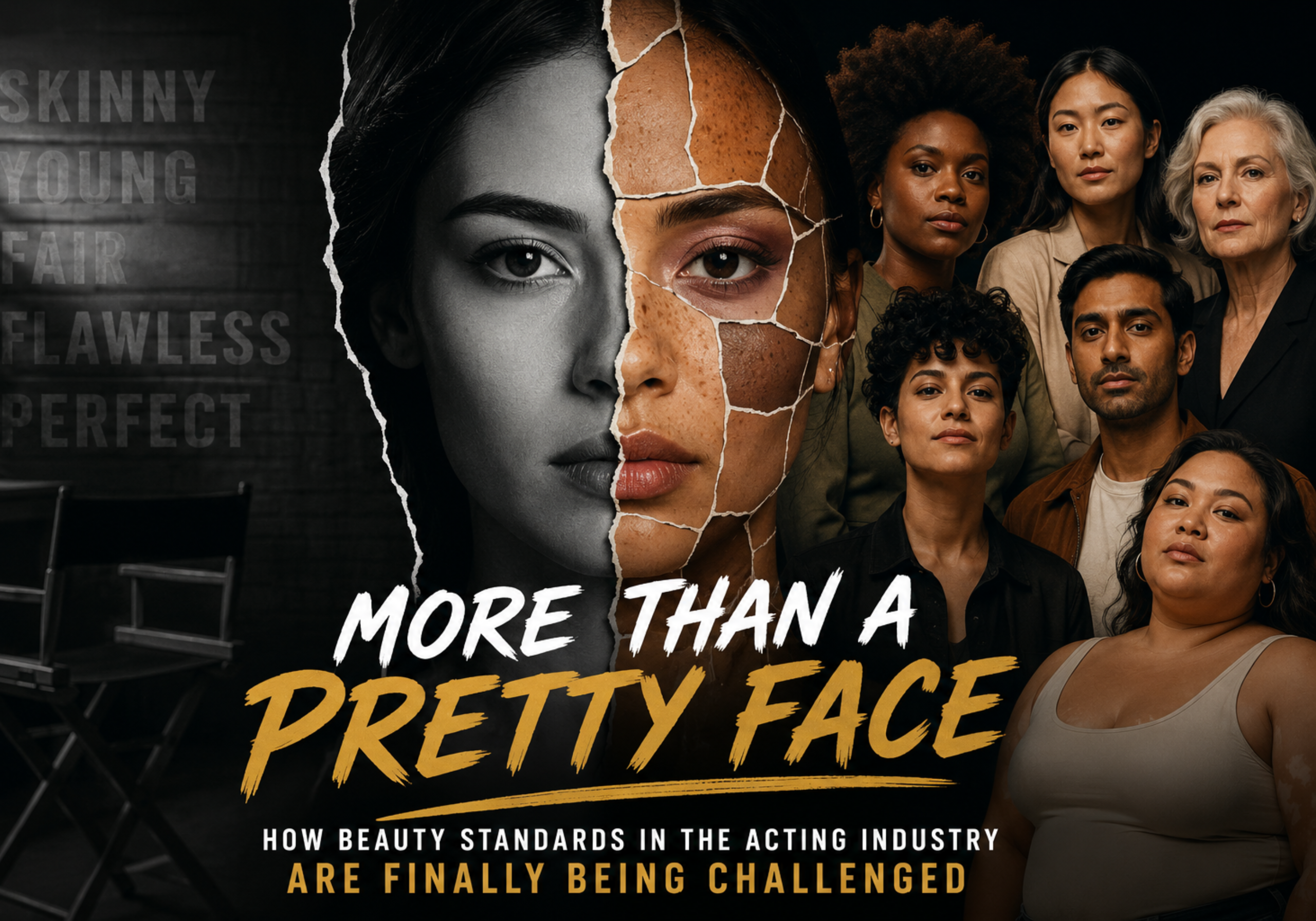
Every audition room has one scene in common: an actor walks in with genuine talent and years of training. Somewhere in the back of their mind is a voice asking whether they look right for the role. Too short, too heavy, or maybe too unconventional. This voice doesn’t always belong to the casting director. Sometimes, by the time an actor reaches that room, the industry has already put it in their head.
Beauty standards in the acting industry have a long, complicated, and deeply fascinating history. They’ve shaped who gets cast, who gets celebrated and who gets overlooked. But what’s even more interesting is how these standards are being challenged, redefined, and in some cases, completely dismantled.
The Origin of the “Look”
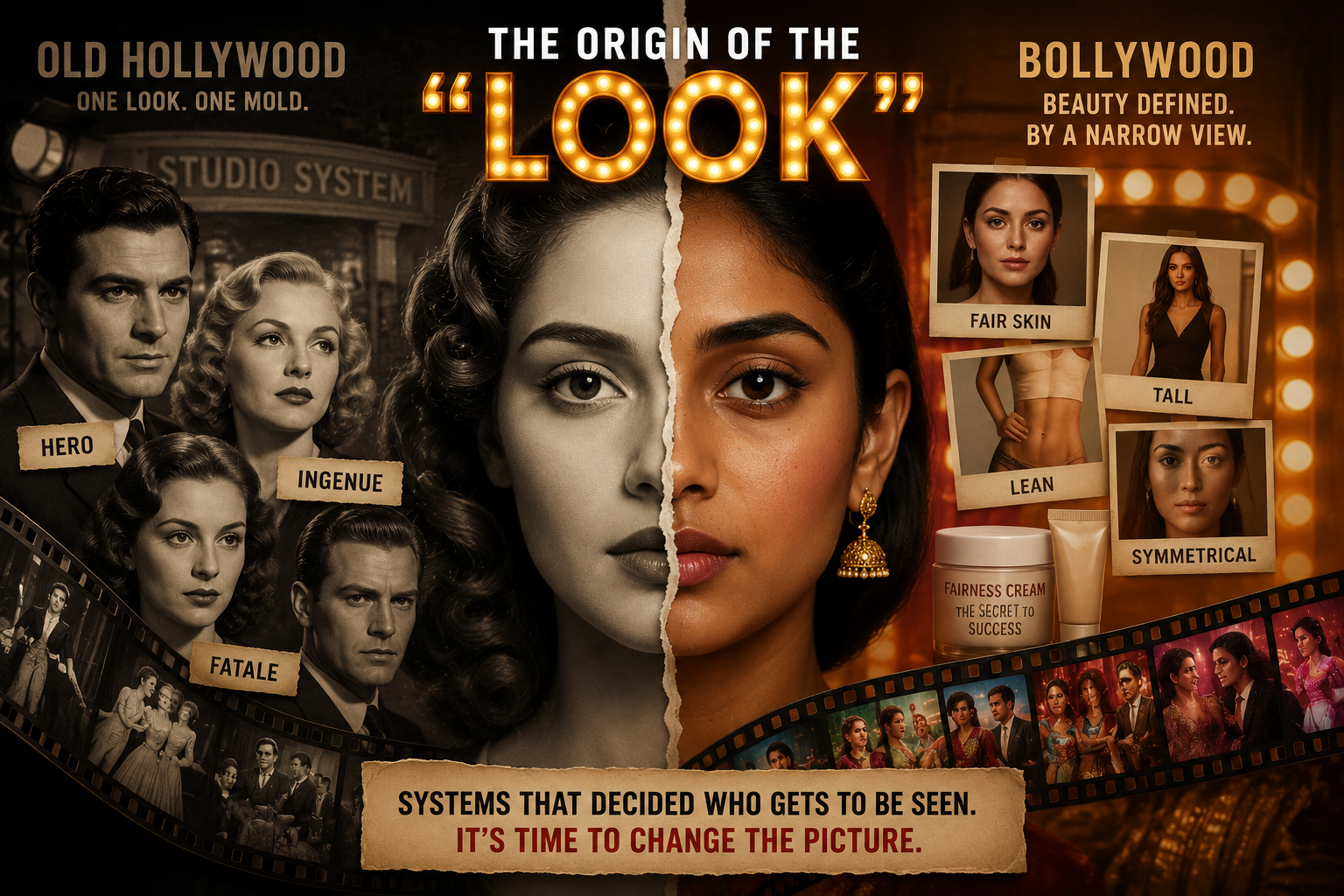
The idea that actors need to look a certain way is almost as old as cinema itself. In the early days of Hollywood, studios built entire systems around physical appearance. Actors were signed on the basis of their faces before their talent was even tested. The studio era created archetypes: the square-jawed hero, the delicate ingenue, the glamorous femme fatale. If you didn’t fit one of these molds, your path was considerably narrower.
Bollywood carried its own version of this blueprint. Fair skin was treated as a prerequisite. A tall, lean, and symmetrical figure became a default for female leads. Heroes were expected to look heroic in a very specific, very narrow way. The fairness cream industry in India grew into a multi-billion-dollar enterprise partly because cinema told audiences, for decades, what desirability was supposed to look like.
These weren’t just aesthetic preferences. They were systems that excluded entire groups of people from visibility and opportunity, often along lines of skin tone, caste undertones, body type, and gender expression.
How the Industry Enforced the Standard
The enforcement of beauty standards in acting happened quietly and consistently. It wasn’t written into contracts or released in press releases. It wasn’t written into contracts or announced in press releases. It lived in the feedback an actor received after an audition. In the roles they were offered. In the parts of a script that described physical appearance as though it were a personality trait.
In Hollywood, actresses have long faced an “age-appearance penalty” that has no male equivalent. Female actors show shorter career spans than their male counterparts in longitudinal studies tracking industry performance over time. A woman in her 40s is frequently cast in supporting roles, while a man the same age is cast as a romantic lead. The math behind who gets the good parts has, historically, included appearance as a variable for women in a way it hasn’t for men.
In Bollywood, the pressure has been even more specific. The expectation of fair, flawless skin created a culture of heavy makeup, skin lightening, and in some cases, pressure on actors to alter themselves before they were considered ready for the screen. Widespread insecurity became the industry’s unintentional product. Girls grew up watching films and believing their natural skin tone, body type, or features disqualified them from certain kinds of roles.
The casting room became a place where talent competed with a checklist of physical criteria that had little to do with the craft of performance.
What’s Changing and Why It Matters
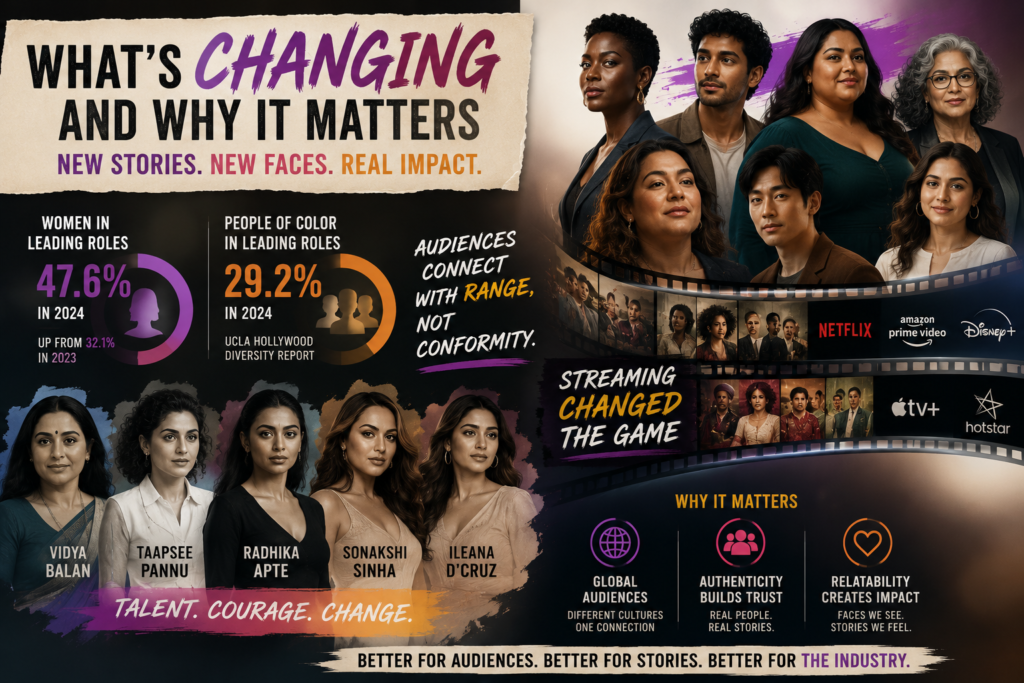
Here’s where things get genuinely interesting. The definition of what it means to have a “screen presence” is broadening in ways the industry hasn’t seen before. In Hollywood, women achieved 47.6% of leading roles in 2024, up from 32.1% in 2023. People of color represented 29.2% of lead actors in the same period, according to UCLA’s Hollywood Diversity Report. These represent a visible shift in who gets the good parts, and a widening acknowledgement that audiences connect with range rather than conformity.
In Bollywood, the cracks in the old standards are showing clearly. Vidya Balan built a career on talent and screen presence over conventional glamour. Taapsee Pannu and Radhika Apte created bodies of work that depend entirely on their skills as performers. Sonakshi Sinha and Ileana D’Cruz have called out unrealistic body expectations publicly. The conversation has moved from whispers behind closed doors to open discourse, and that shift matters enormously for the next generation of actors.
Streaming platforms have accelerated all of this. When a platform needs content for global audiences across hundreds of cultures, the narrow aesthetic of one industry’s beauty standard stops making commercial sense. Authenticity and relatibility started to matter more because they translate better. A face that looks like someone’s neighbour, sibling or friend creates connection in a way that aspirational distance doesn’t always achieve.
The Craft Has Always Been the Point
What’s striking, when you look at the actors who have built genuinely lasting careers, is how rarely conventional beauty is the thing people remember them for.
Meryl Streep was described as “not beautiful enough for Hollywood” early in her career by people who turned out to be profoundly wrong. Irrfan Khan had a face that the industry initially wasn’t sure what to do with. He became one of the most internationally celebrated actors India has ever produced. Steve Buscemi, Toni Collette, and Adrien Brody built careers not by fitting a template but by making you forget the template exists.
The reason is simple. Great acting is about truth. It’s about inhabiting a character so fully that audiences stop seeing a performance and start believing a person. Truth doesn’t come from a symmetrical face or a toned physique. It comes from genuine emotional access, lived experience, technical skill, and the kind of presence that holds a room without trying to.
Looks Don’t Make the Performance
The conversation about beauty standards in the acting industry is really a conversation about what acting is for.
If it’s for visual spectacle alone, then appearance matters. But the most enduring films and theatre don’t work that way. It asks audiences to go somewhere, feel something, understand a human experience they might not have encountered otherwise. That job requires craft, preparation, emotional courage, and depth. A face can open a door. It cannot do the work that’s required once you’re inside.
The actors who move people are the ones who have done the internal work. Those who have understood their characters from the inside out. Who can make a single close-up of their eyes tell you everything about what a person is living through? That skill has no beauty standard. It cannot be filtered or photoshopped. It either exists or it doesn’t, and it is built through training, experience, and practice.
What the industry is slowly, sometimes reluctantly, coming to understand is that the audiences figured this out long before the studios did. People fall in love with performances. They return to stories. They remember the actors who made them cry, laugh, or think differently about something.
Beauty fades from the screen quickly. Truth stays.
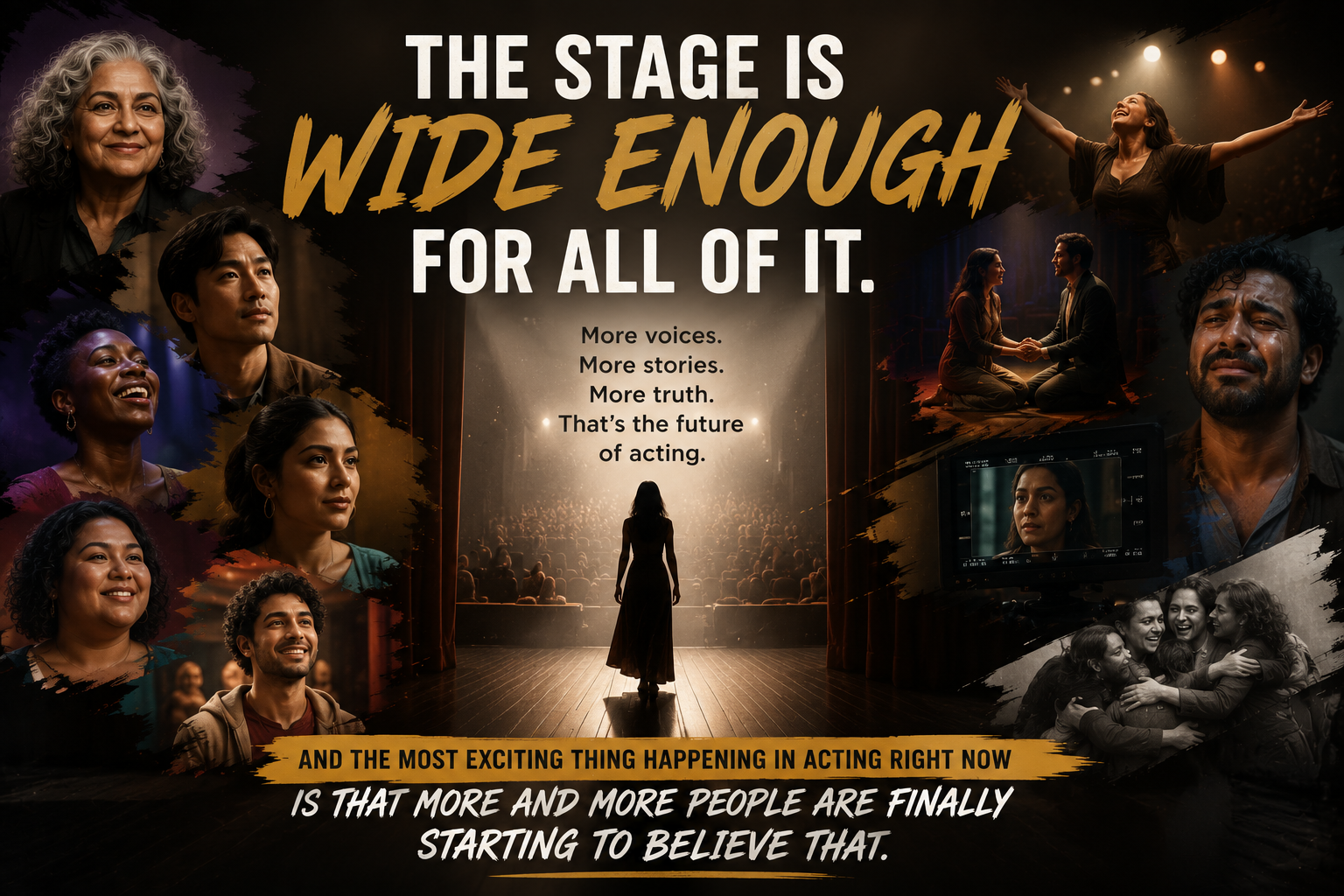
The stage is wide enough for all of it. And the most interesting thing happening in acting right now is that more and more people are finally starting to believe that.
Expand your understanding of the acting industry with these hand-picked articles:
Close-Up, Medium Shot, Wide Shot: The Guide for Actors

1 Comment
Loved this perspective! As a woman, I’ve always felt the pressure of unrealistic beauty standards, so it was refreshing to read something that focuses on talent over appearance. Beautifully written.