
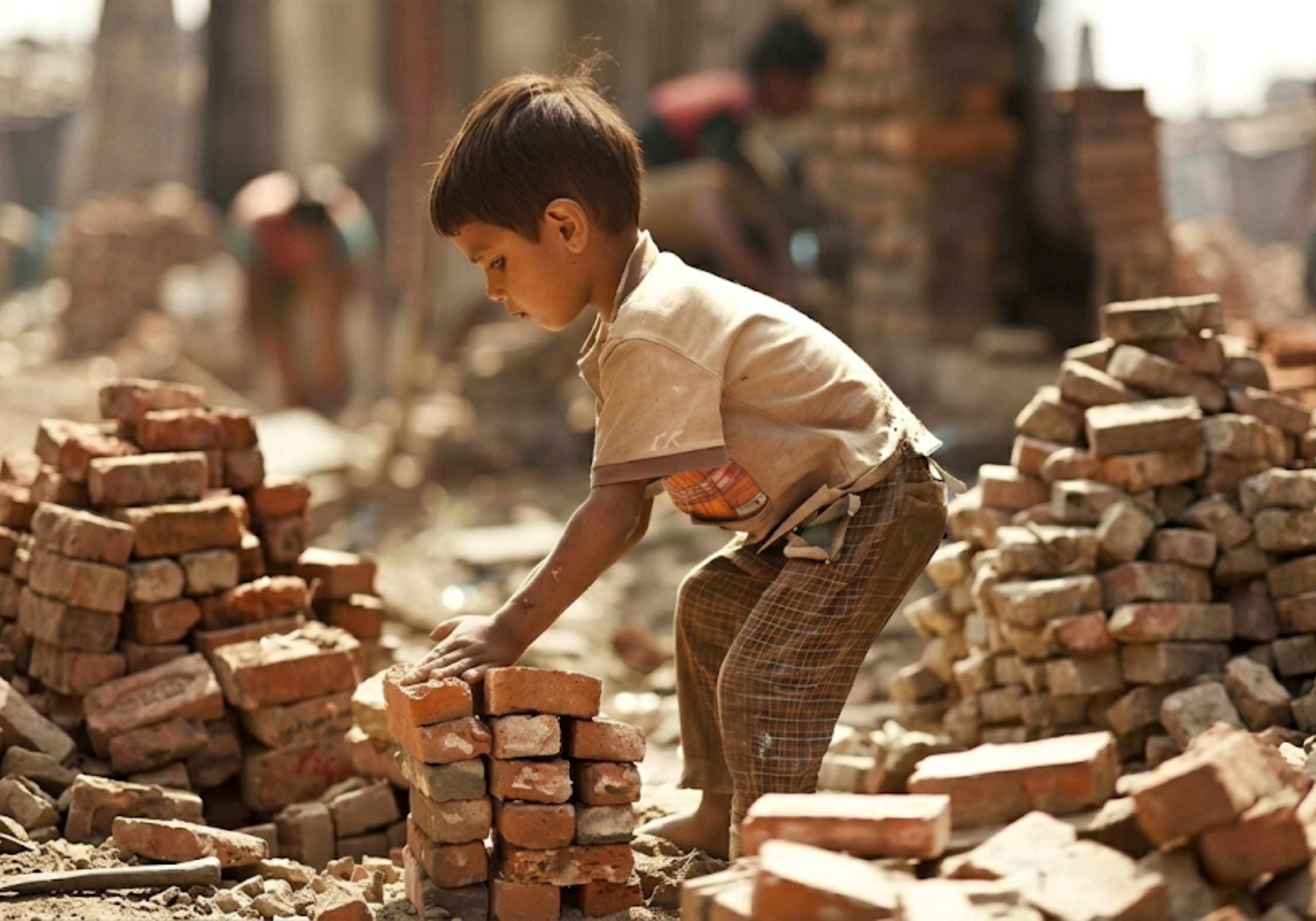
Raju is eleven years old. He lives in a village in Madhya Pradesh, about 4 kilometres from the nearest government school. The school has two teachers for five grades. One of them shows up most days. The textbooks are from three years ago and some pages are missing. The classroom has no fan and in the scorching heat of summer, the temperature inside touches 43 degrees. Raju tried school for 3 years and then he stopped going. His father, who works at a brick kiln nearby, got him a place there too. Raju now earns around 150 rs per day, sending most of it home. When people talk about child labour in India, they often discuss it as a thing that’s being done to children and while that is true, Raju’s story asks an uncomfortable question: what happens when a child chooses work over school, and the system has given him every reason to make that choice?
The Numbers Behind the Story
India is home to an estimated 13.2 million child labourers between the ages of 5 and 17, according to a 2025 study combining Census and survey data. In 2021, only 613 cases were registered under the Child Labour Act. That gap between reality and enforcement tells you almost everything you need to know about how seriously this problem is being addressed.
The 2025 SDG target of eliminating child labour was missed. India will likely miss the 2030 bonded labour target as well. A Parliamentary Standing Committee warned that eliminating child labour by 2025 was “practically not possible.” We have since crossed that deadline. The target moved but the children did not.
Child labour in India is concentrated in agriculture, brick kilns, stone quarries, carpet weaving, bidi rolling, domestic service, and the informal textile sector. In 2024, 58 children were rescued from a distillery in Madhya Pradesh after working 11-hour shifts with chemical burns on their hands. These were children. In a distillery. In 2024.
Why Children Are Choosing Work Over School
Here is the part of this conversation that makes people uncomfortable: child labour in India is partly driven by children and families who have weighed their options and made a rational decision within an irrational system.
Poverty is the main engine. The ILO states plainly that child labour is both a cause and consequence of poverty. When adult unemployment is high and family income is unpredictable, a child who can contribute Rs 100 a day is a survival asset. One in two
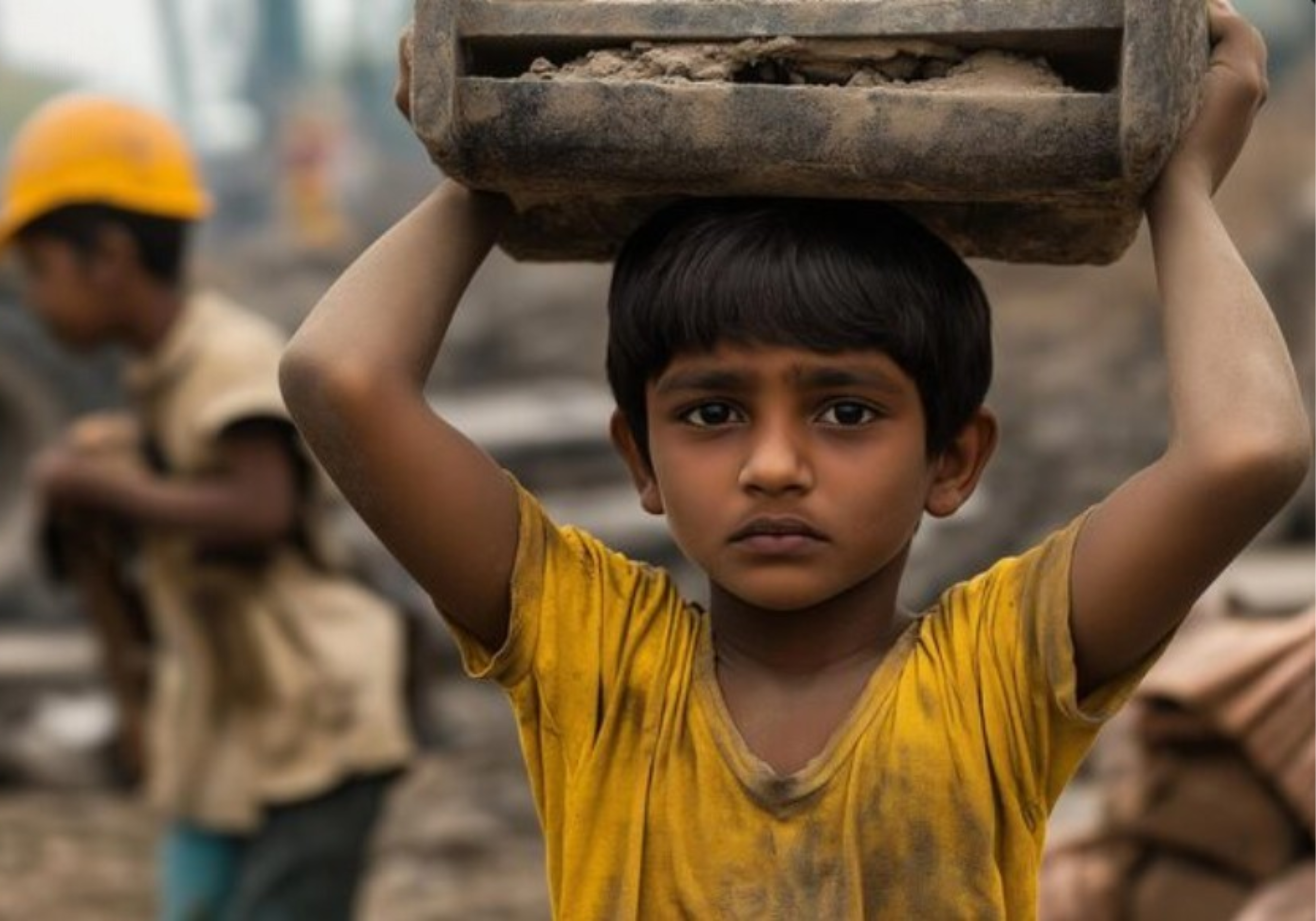
wasted children globally is Indian. When a family is food-insecure, the question of whether their eleven-year-old goes to school or works is a question about whether the family eats.
But poverty alone does not explain why children choose work over school. The state of public education in India does a significant part of that work.
Many government schools in rural and semi-urban India are genuinely difficult places to learn. Teacher absenteeism is a documented, long-standing problem. Infrastructure is inadequate. Teaching is often rote, disengaging, and disconnected from anything useful. A child who goes to school in many of these settings learns little, feels little, and returns home having contributed nothing to the household. A child who works learns a skill, earns money, and feels useful. The system has designed itself to lose the competition.
This is a structural criticism that needs to be made directly: child labour in India persists in part because the alternative we offer children is so poor that work seems like the better option. That is an education system failure as much as it is a poverty problem.
Bonded Child Labour: The Invisible Chain
Bonded child labour is a specific and particularly brutal form of exploitation. It works like this: a family, usually in desperate debt, borrows money from a creditor. The terms of the loan include the labour of a child, who then works to repay a debt they did not create, under conditions they cannot leave, earning wages that are often deducted against a debt that never quite disappears. Bonded child labour is also intergenerational. A child can be working off a loan their grandfather took years ago.
Bonded labour was outlawed in India in 1976, yet bonded child labour continues across sectors and states, thriving in the informal economy where inspections are rare and accountability is almost nonexistent. The National Human Rights Commission has noted it remains widely prevalent across many regions. Bonded child labour has been documented in agriculture, brick kilns, stone quarries, carpet weaving, bidi rolling, silk saree production, gem cutting, and leather products. The debt is often passed across generations. A child can be working off a loan their grandfather took.
In Tamil Nadu in 2024, the government rescued over 330 bonded labourers through inspections across 44,000 establishments. 65 of them were children. That is one state, one year of inspections. The actual scale is impossible to fully measure.
Between 1978 and January 2023, only 315,302 people were released from bonded labour in India across 45 years. Since the 2016 government declaration promising to abolish it, only 32,873 people have been released. That is fewer than 4,000 people per year, in a country where the problem is estimated to affect millions. The pace of release does not match the scale of the problem.
What Keeps the Cycle Spinning
Several forces work together to keep child labour entrenched.
The legal framework has gaps that allow exploitation to survive. The Child and Adolescent Labour Act defines a child as under 14. Other laws consider anyone under 18 a child. This definitional inconsistency means children between 14 and 18 fall into a grey zone where protections are weaker. The Occupational Safety, Health and Working Conditions Code only applies to establishments with 10 or more employees, which exempts the majority of small businesses and informal enterprises where most child labour actually happens.
Social norms in many communities accept child work as normal. In caste-based occupational systems, children learn the family trade from a young age. This is often described as cultural continuity. It is also, in practice, a mechanism that locks children into low-income work across generations.
Enforcement is chronically weak. In 2021, only 613 cases were registered under the Child Labour Act across the entire country. Either child labour has nearly vanished, or the enforcement system is not looking very hard.
What Would Actually Help
Solutions to child labour in India require honesty about what has worked, what has failed, and where the real leverage points are.
Fix the schools, seriously. The most powerful intervention against child labour is a school that children actually want to attend. That means trained, present teachers. That means relevant, engaging curricula. That means infrastructure that makes learning possible. The Midday Meal Scheme has been one of the most effective child labour interventions India has implemented, because it gave families a material reason to send children to school. That model of making school valuable needs to be expanded and deepened.
Economic support for vulnerable families. Conditional cash transfer programs that support families financially in exchange for children staying in school reduce the economic pressure that pushes children into work. These programs exist in India. Their reach needs to expand, and their implementation needs to improve.
Serious enforcement of bonded child labour laws. The gap between 1976 legislation and 2024 reality on bonded child labour is an enforcement failure. State labour departments, police, and child welfare agencies need better coordination, better funding, and clearer accountability for results.
Community-level awareness that includes children. Children who know their rights are harder to exploit. School curricula, community programs, and peer networks that explain what child labour is, what the law says, and where to report violations give children a form of protection that external enforcement alone cannot provide.
Address caste and structural inequality. The children most likely to be in child labour come from Scheduled Castes, Scheduled Tribes, and the poorest OBC communities. Any serious response to child labour has to engage with the structural inequalities that make certain children more vulnerable than others.
Raju is still at the brick kiln because his family needs the income. The school which is four kilometres away hasn’t improved. Nobody has offered his parents a reason compelling enough to change the calculation.
Child labour in India is not a mystery. Its causes are documented and its mechanisms are understood. The interventions that work are known. What is missing is consistent political will to prioritize the wellbeing of children who have no political voice, come from communities with little power, and are invisible to most of the people who make policy.
Every child in a brick kiln, a carpet shed, a gem-cutting workshop, or a household as domestic help is a child who is somewhere they should not be. They are there because poverty pushed them, because bonded child labour trapped them, or because the education system failed to offer them anything worth staying for.
All three of those things can be changed. The question is whether we decide they matter enough to change them.
Along with this, you may also read: The Truth About Postpartum Mental Health