
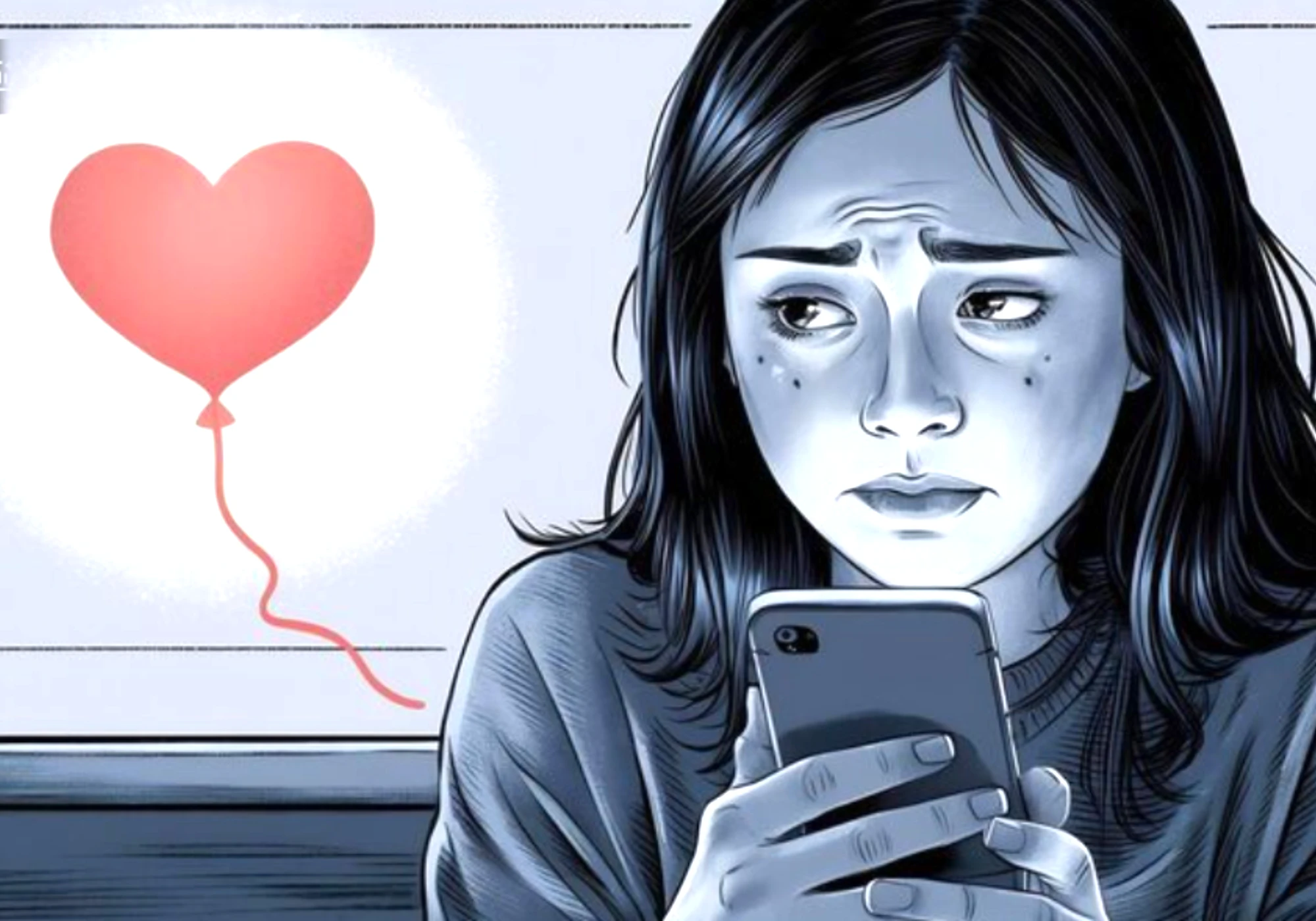
Meera matched with someone on a popular dating app. The conversations were warm, consistent, and seemingly genuine. There were pictures, he seemed to have a good job, a personality, and honestly, everything seemed fine. After 2 weeks of chatting, he suggested they move their conversations to whatsapp and asked for her number. She agreed. A week later, he knew her full name, where she worked, and the area she lived in. He had never asked directly for any of this. He had simply paid attention.
When Meera eventually stopped responding, the messages turned hostile. He had screenshot her photos from the app. He threatened to send them to her colleagues.
Meera’s experience is specific, but the pattern is not rare. It is one version of the many ways women encounter risk in online dating spaces. Women’s safety in online dating is not a niche concern for the overly cautious. It is a widespread, documented issue that deserves far more honest conversation than it currently gets.

Online Dating in India: How Big is it?
Online dating in India is growing fast. The market is expected to see significant growth throughout the decade, driven by rising smartphone penetration, changing social attitudes toward dating among urban young adults, and the practical reality that meeting people through traditional social networks is becoming harder in cities.
In 2024, 62% of new couples met online globally, outpacing every other method. A 2024 survey by Indian dating app QuackQuack of 7,500 women aged 18-35 across Tier 1, 2, and 3 cities found that 46% of Indian women actually see dating apps as a safer way to connect compared to real-life encounters in public spaces. This is telling. When real-world streets and online spaces feel unsafe, women turn to apps looking for something that feels more controlled.
The problem is that online spaces carry their own specific risks, and women’s safety in online dating is still not being taken seriously enough by the platforms, the legal system, or the wider conversation about gender-based harm.
What are the actual risks?
A 2025 peer-reviewed narrative review published in Humanities and Social Sciences Communications looked specifically at harassment and abuse of Indian women on dating apps. The study synthesized growing literature on Technology-Facilitated Violence Against Women (TFVAW) and found that Indian women on dating apps regularly face catfishing, stalking, harassment, sexual coercion, and, in some cases, physical violence following in-person meetings.
The risks can be broken down into distinct but often overlapping categories:
Catfishing and deception. A significant number of profiles on dating apps are fake or misrepresent the person behind them. On apps that do not require identity verification, it is easy for someone to create a persona that bears little resemblance to reality. 71% of users globally admit to spending an hour Googling their dates before meeting them.This is not paranoia. It is a rational response to the verification gap that most platforms have failed to close.
Pressure to move off-platform. The pattern of pushing conversations from dating apps to private messaging services like WhatsApp is one of the most consistent warning signs in women’s safety in online dating. Once a conversation moves off-platform, the dating app’s reporting tools, content moderation, and safety features no longer apply. The 2026 online dating safety data shows this “off-platform pivot” pattern increasing year on year.
Image-based abuse. Screenshots of photos, profile images, and private messages are used to harass, blackmail, or humiliate women who reduce or end contact. This is a form of technology-facilitated violence that many women do not report because they fear the image will spread further if they draw attention to it.
Romance scams. Romance scams reported to the FTC totaled $1.14 billion in losses in 2025. While financial scams target all genders, women’s safety in online dating includes protection from emotional manipulation designed to extract money, often over months of carefully constructed relationship-building.
Physical danger from meetups. Women’s safety in online dating extends into real-world encounters. Meeting someone from an app carries inherent risk when the person’s identity has not been verified. The review of Indian women’s experiences found that breaches of trust, particularly around promises made during the course of online interaction, created vulnerability that sometimes extended into physical encounters.
Stalking. Sharing location, workplace, or daily routine information during early online conversations creates material for stalking. What feels like natural conversation can become a data trail in the hands of someone with bad intent

Why Women’s Safety in Online Dating Deserves Specific Attention
88% of women say safety is their biggest concern on dating apps. That is nearly nine in every ten women. This is the backdrop against which every match, every conversation, and every decision to meet happens.
India’s broader context makes this more acute. The crime rate against women in India increased by 12.9% between 2018 and 2022, and two-thirds of harassment incidents go unreported. The National Annual Report and Index on Women’s Safety found that 14% of women under 24 experienced harassment in public spaces in 2024, double the rate for older women. Young women, who are also the primary users of dating apps, face the highest risk in both online and offline environments.
When women encounter harassment through a dating app in India, the pathways to justice are narrow. Reporting to the app may or may not result in account removal. Reporting to police often means explaining what a dating app is, why you were on it, and navigating a system that has historically treated women reporting online harassment with skepticism or blame.
The gap between the scale of risk and the quality of redress is itself part of what makes women’s safety in online dating such an urgent issue.
What Platforms Can Do
Improving women’s safety in online dating begins with the platforms that profit from it.
Mandatory identity verification. AI-generated profiles and fake personas are substantially harder to maintain on platforms that require live selfie verification matched against a profile photo. Platforms that have introduced this report significant drops in safety incidents. The technology exists. The decision to require it is a business choice, and too many apps have chosen not to make it.
Keep conversations on-platform longer. Designing apps so that users have reasons to stay in the in-app messaging environment, and clearly flagging requests to move to external platforms as a potential risk signal, would reduce the vulnerability that comes with the WhatsApp pivot.
Real human moderation, not just AI. Automated content moderation misses patterns that human reviewers catch, particularly in text-based harassment that uses coded language or escalates gradually. Investing in moderation is expensive. It is also necessary.
Emergency contacts and location sharing features. Several apps have introduced features that allow users to share their real-time location with a trusted contact during a first date. These features should be standard and prominently surfaced, not buried in settings.
Easier, faster reporting with real consequences. When a woman reports harassment on a dating app, the response should be fast, transparent, and result in meaningful action. Visible enforcement sends a signal to the broader user base about what behavior is acceptable.
What Women Can Do to Protect Themselves
Women’s safety in online dating also involves individual choices, and sharing practical strategies is part of taking the issue seriously.
Reverse image search every photo. Before investing emotionally in a conversation, run the person’s photos through Google Images or TinEye. Stolen photos are one of the most consistent features of fake profiles.
Keep personal information off the app for as long as possible. Your last name, workplace, neighborhood, and daily schedule are pieces of information that can be used against you. There is no need to share them early, and good-faith matches will understand this.
Stay on the app’s messaging system longer than feels necessary. The pressure to move to WhatsApp often comes early. Slowing this down is a reasonable boundary to set, and how someone responds to it tells you something useful about them.
Tell someone where you are going. Share the person’s profile, name, and the meeting location with a friend or family member before any in-person meeting. Use a dating app’s location-sharing feature if it has one.
Meet in public for the first several meetings. This is widely recommended and still the single most reliable protective measure for the in-person phase of online dating.
Trust discomfort. If something in a conversation feels manipulative, pressured, or dishonest, that feeling is information. Women’s safety in online dating includes the safety to act on instinct and leave a conversation without explaining yourself.
The Broader Conversation We Need to Have
Women’s safety in online dating will improve when platforms invest in it, when laws catch up to the digital nature of harassment and abuse, and when the cultural conversation stops treating online danger as something women bring on themselves by using dating apps at all.
Meera did nothing wrong. She talked to someone who misrepresented himself and then threatened her when she withdrew. The problem was his behavior, and the platform that let him operate anonymously until harm had already occurred.
Online dating is here to stay. For women in India, it is also becoming the primary way to meet potential partners outside of family networks and traditional introductions. The question is whether the spaces where this happens will be made safer, or whether women will continue to navigate significant risk with minimal institutional support.
Women’s safety in online dating is a design problem, a legal problem, a cultural problem, and a platform accountability problem. It is not a problem with women choosing to date online.
You may also read: – The-thought-of-running-away-from-home-and-marrying-at-a-teenage.

1 Comment
So true. Point of fact. Dating apps must actually build a way to work on women’s safety.