
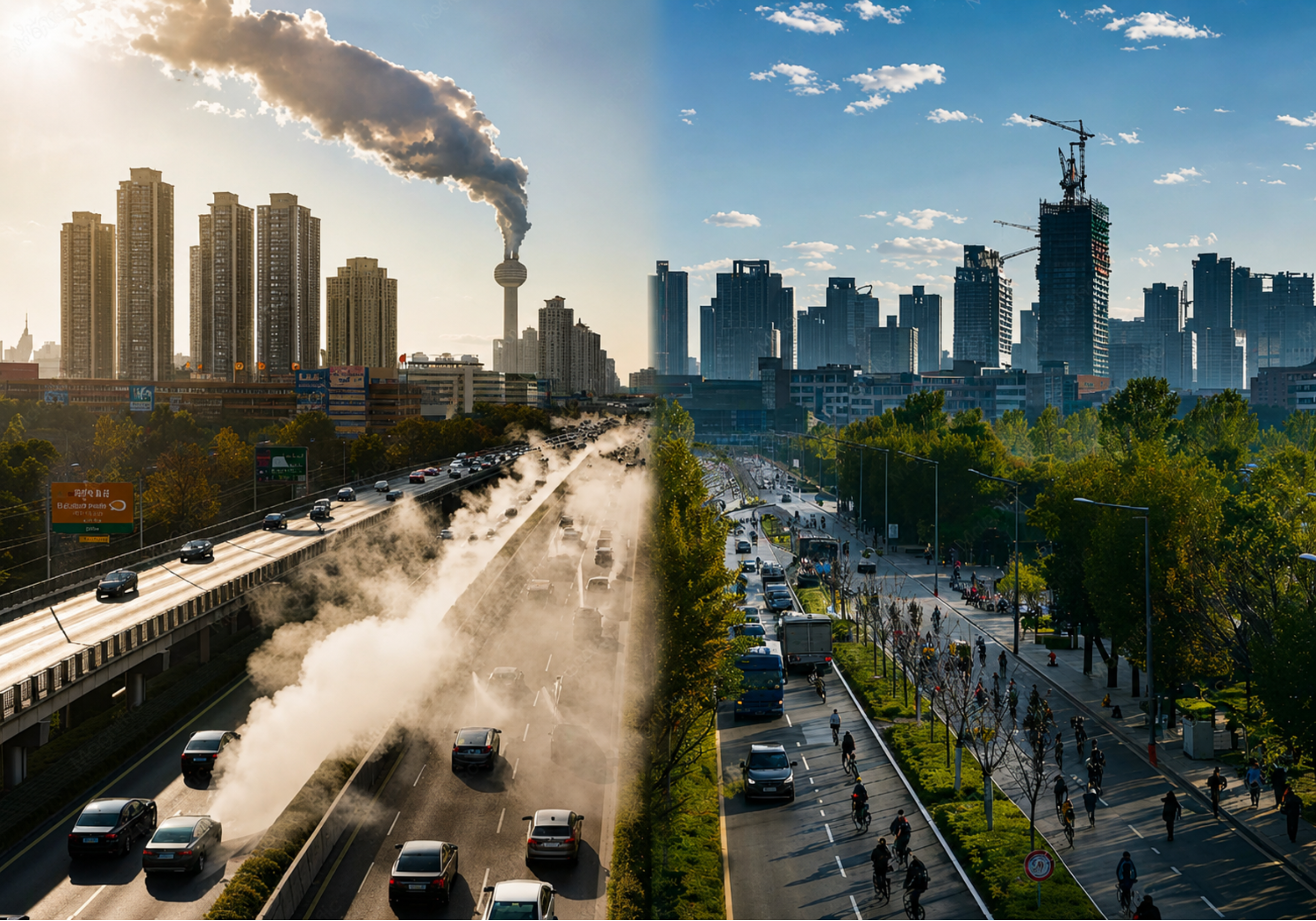
There have been times in life where I’ve had to stay in Delhi for work. Every morning, I would step out of my hotel I could feel the pollution before I could even see it. The sky had a grey tinge that had nothing to do with clouds. My eyes would sting a little and my throat felt coated. My friend’s seven-year-old daughter already had two rounds of antibiotics that month for a respiratory infection. The mother had stopped asking her doctor whether the air has something to do with it because she already knew the answer. She just didn’t know what to do about it.
This story is very common in India. The fact that it is a very ordinary occurrence is what makes it a problem. Air pollution in India is now one of the leading risk factors for death in the country, chewing tobacco, unsafe water, and even cardiovascular disease risk factors. It cuts over two million lives short every year. And yet, during a 2025 winter session of Parliament, the Union Health Ministry stated there was no data directly linking air pollution to deaths and diseases. The Environment Ministry dismissed global AQI monitors as unreliable. Experts, doctors, and researchers pointed to decades of published evidence and called these statements what they were: a denial of a well-documented public health catastrophe.
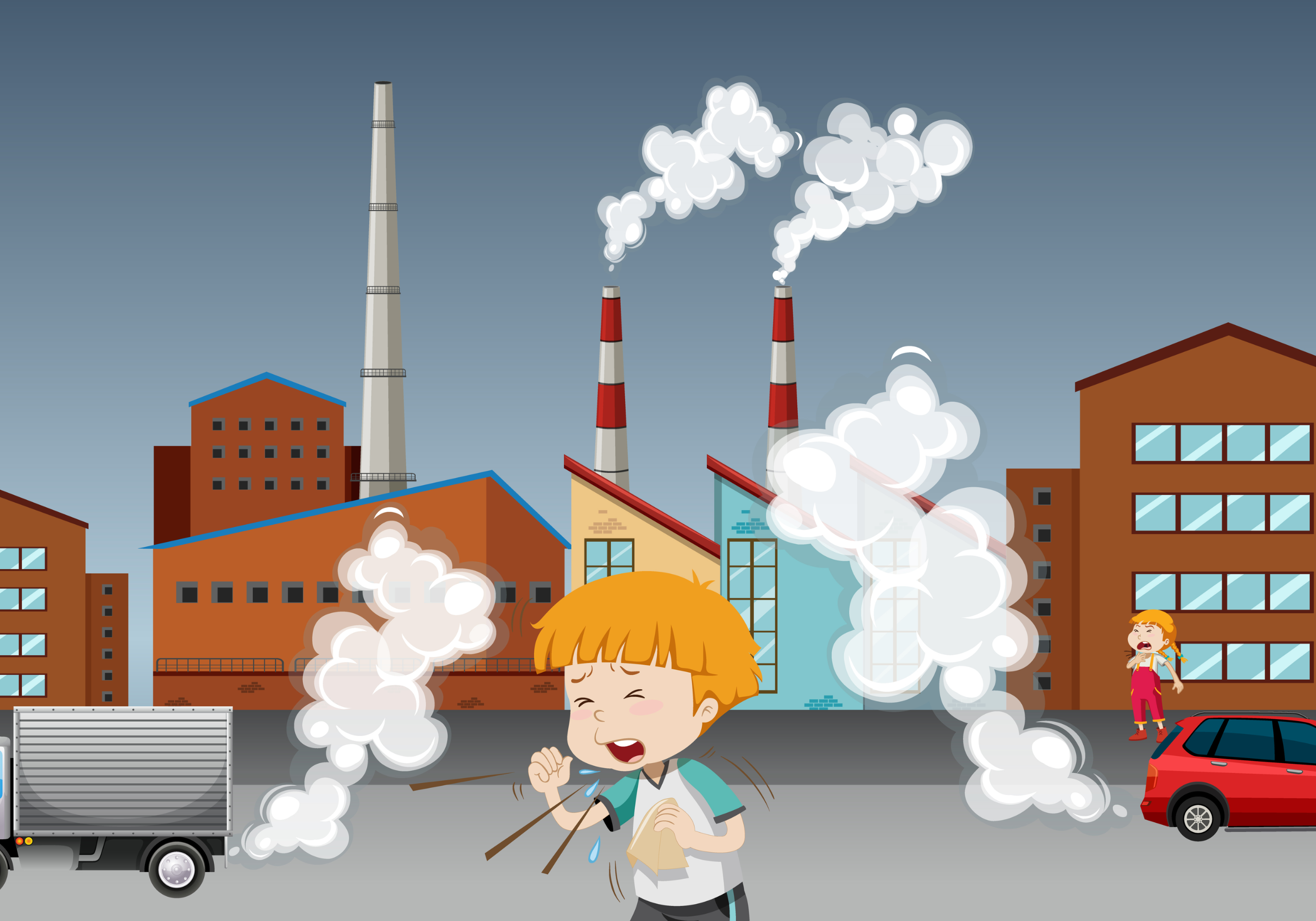
What Is the Air Quality Index and Where Does India Stand?
The Air Quality Index, commonly called AQI, is a standardized scale used to measure how polluted the air is on any given day and communicate the health risk to the public. In India, the Central Pollution Control Board (CPCB) uses a scale that runs from 0 to 500, with categories ranging from “Good” (0-50) to “Severe” (401-500).
India’s average PM2.5 concentration in 2025 was 48.9 micrograms per cubic metre, which translates to an AQI of approximately 134, classified as “unhealthy for sensitive groups.” This level is nearly 9.78 times higher than the WHO annual guideline of 5 µg/m³, placing India sixth globally in the 2025 World Air Quality Report.
In winter, things actually get worse. Cities like Delhi, Patna, Lucknow and Kolkata routinely record AQI readings above 400. In November 2016, Delhi’s AQI crossed 999, nearly 200 times the WHO safe limit. In the World Air Quality Report 2023, of the 100 most polluted cities in the world were in India.
The geography of Northern India makes this worse. The Indo-Gangetic Plain is surrounded by the Himalayas to the north, and in winter, when winds drop, polluted air has nowhere to escape. It sits over cities like a lid on a pot.
Main Causes of Air Pollution in India
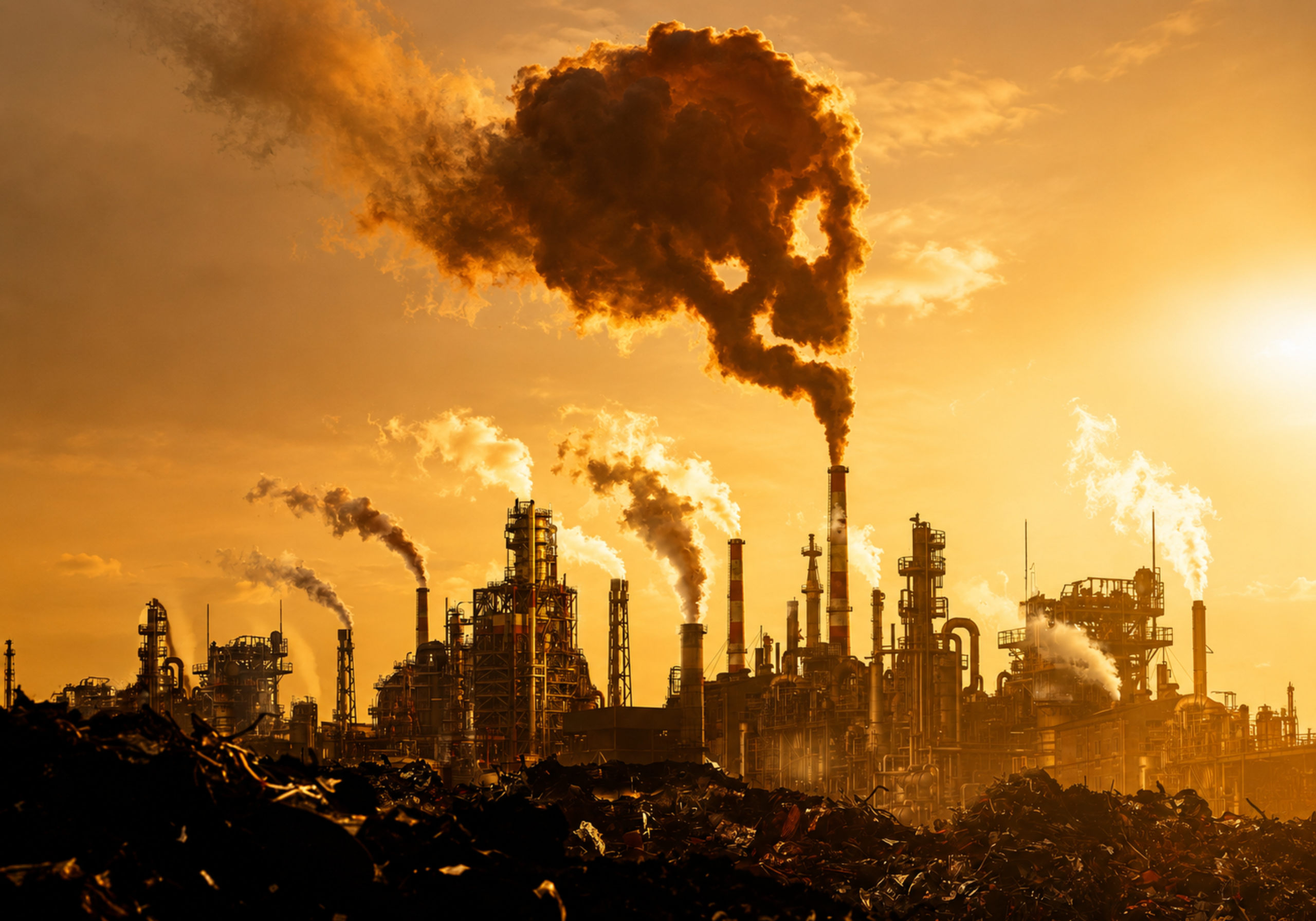
Air pollution in India comes from multiple directions at once, which is part of why it is so difficult to address. Industrial emissions contribute an estimated 51% of particulate pollution, followed by vehicular exhaust at 27%, agricultural crop residue burning at 17%, and domestic biomass combustion at approximately 5%.
Industry is the single largest contributor. Coal-fired power plants, brick kilns, steel mills, cement factories, and chemical processing units release enormous quantities of particulate matter, sulphur dioxide, and nitrogen oxides into the air continuously.
Vehicles are the dominant source in urban areas. India’s rapid motorization, combined with an ageing vehicle fleet and poor fuel quality enforcement in many regions, produces significant tailpipe emissions in every major city.
Crop burning is the most visible cause during October and November. Farmers in Punjab and Haryana burn paddy stubble to clear fields quickly before the next sowing season. Satellite imagery from NASA records tens of thousands of fire points across these states during the burning season. The smoke drifts into Delhi and surrounding cities, combining with vehicle and industrial emissions to produce the annual smog event that makes national headlines every winter.
Biomass cooking is the least discussed cause but one of the most significant. Approximately 76% of households in rural India rely on solid biomass for cooking, including wood, dung cakes, and crop residues. Indoor air from a biomass cookstove can be many times more polluted than outdoor air in a smogged-up city.
Construction dust from India’s massive infrastructure expansion is a year-round contributor in urban areas, particularly in cities where regulation of construction sites is inconsistent.
The Death Toll: What Air Pollution in India Actually Costs
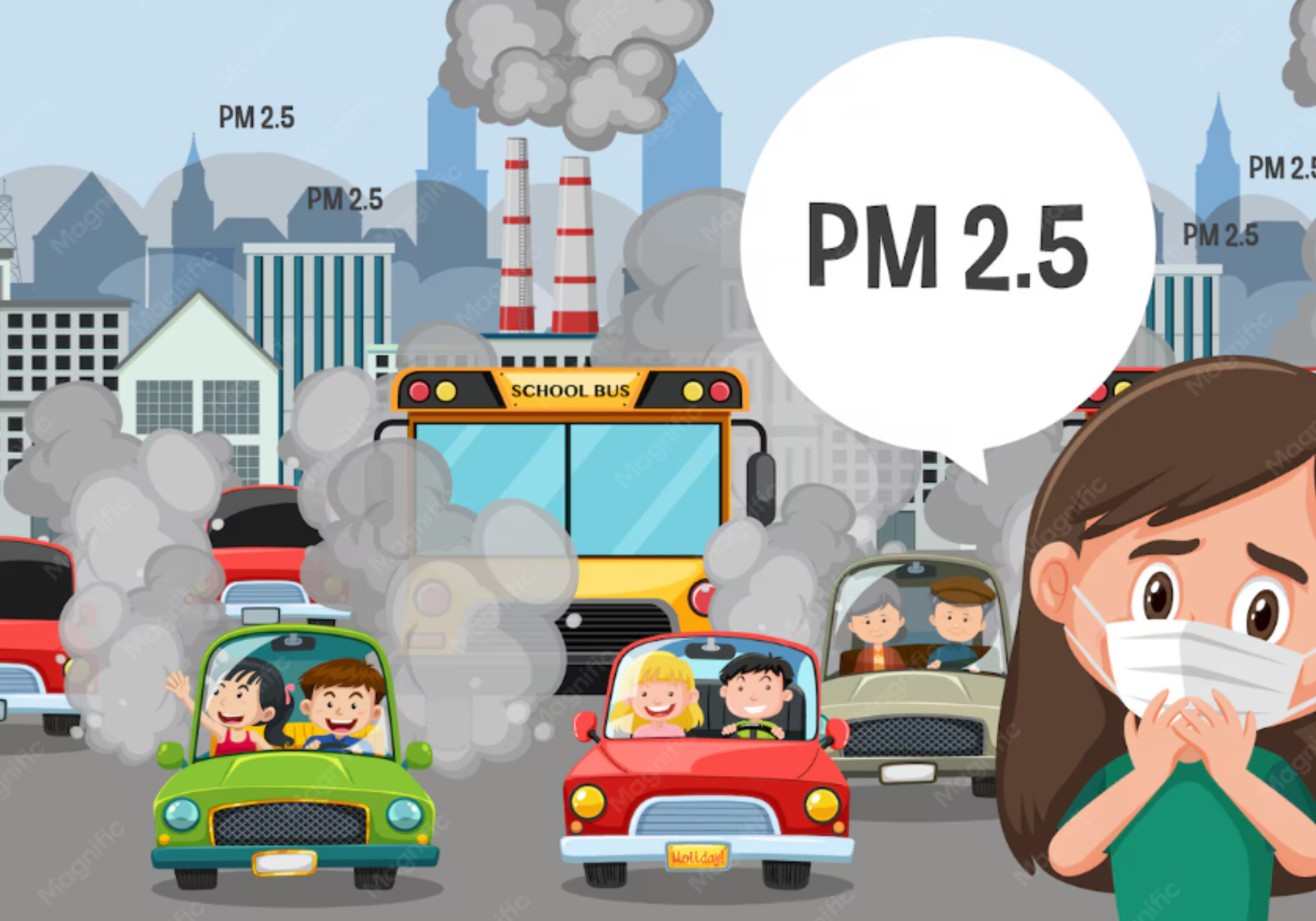
Air pollution contributes to the premature deaths of over two million Indians every year. The Lancet Countdown 2025 calculated that air pollution from fossil fuels and biomass caused 1.6 million deaths in India in 2021 alone. A 2025 Earth5R study put the figure at 1.72 million.
Particulate pollution reduces average Indian life expectancy by 3.5 years, nearly twice the impact of childhood and maternal malnutrition, and more than twice the impact of tobacco use. For residents of Delhi-NCR, the toll is catastrophic: an estimated 8.2 years of life expectancy lost. Bihar, Haryana, Uttar Pradesh, and West Bengal follow closely.
The economic cost matches the human cost. The Lancet Countdown 2025 estimates that premature mortality from outdoor air pollution cost India $339.4 billion in 2022, equivalent to approximately 9.5% of GDP.
And here is the detail that stops you in your tracks: a doctor at Delhi’s Sir Ganga Ram Hospital noted that when he began practicing 30 years ago, most of his lung cancer patients were male smokers in their 60s. Today, his patients are increasingly non-smokers, 40% are female, and around 10% are in their 30s and 40s. Black deposits have been found in the lungs of teenagers. This is what air pollution in India is doing in real time.
Effects of Air Pollution on Health in India
The health effects of air pollution in India are wide-ranging and affect virtually everyone, though the poorest and most vulnerable bear the heaviest burden.
Respiratory diseases are the most immediate consequence. Long-term exposure to particulate matter causes asthma, chronic bronchitis, and COPD. India already has one of the highest rates of COPD patients in the world, and COPD is now the second-largest cause of death after heart disease.
Cardiovascular disease is a direct consequence of air pollution that many people don’t associate with the air they breathe. Fine particulate matter (PM2.5) enters the bloodstream and contributes to inflammation, arterial damage, and increased risk of heart attack and stroke.
Lung cancer is rising among non-smokers in India’s most polluted cities, a pattern that has alarmed oncologists and pulmonologists across the country.
Infant mortality is another grim consequence. Household and outdoor particulate matter pollution was the main cause of death for more than 100,000 Indians Indian infants during the first month of their lives in 2019. The lungs of a newborn are uniquely vulnerable to pollutants in the air.
Cognitive development in children is increasingly being studied as a health effect of air pollution in India. Research links early exposure to high pollution levels to reduced cognitive function, lower school performance, and attention deficits.
How to Reduce Air Pollution in India: What Would Actually Work
“How to reduce air pollution in India” is a question that has been studied extensively. The answers are known. The issue is implementation and political will. Each of the following approaches represents a proven, evidence-backed answer to how to reduce air pollution at scale.
Transition away from coal. Industrial emissions are the largest single source of air pollution in India. A faster, better-funded transition to renewable energy for both power generation and industrial processes would have the largest single impact on air quality. India’s renewable energy sector is growing, but coal still dominates power generation.
Accelerate the shift to electric vehicles. Vehicles contribute 27% of particulate pollution in urban India. Expanding EV infrastructure, strengthening emission standards for internal combustion vehicles, and improving public transport in cities are all practical steps toward how to reduce air pollution in India’s urban centres.
Support farmers to stop burning stubble. Crop residue burning is a policy failure as much as a farming practice. Farmers burn because the alternatives are expensive and the turnaround time between harvests is short. Subsidizing Happy Seeder machines, providing timely financial support for in-situ management, and strengthening state-level enforcement are all documented approaches to how to reduce air pollution from this source.
Replace biomass cook stoves with clean cooking fuel. The Pradhan Mantri Ujjwala Yojana scheme has distributed LPG connections to millions of rural households. The problem is that many families cannot afford to refill cylinders regularly and revert to biomass. Subsidizing LPG refills for the poorest households would reduce indoor and outdoor air pollution simultaneously, and represents one of the clearest answers to how to reduce air pollution in rural India.
Strengthen construction dust regulation. Most cities have rules about wetting construction sites, covering materials, and running dust suppression. Most cities do not consistently enforce them. Better enforcement would meaningfully reduce PM10 levels year-round.
Expand and improve AQI monitoring. Concerns about the accuracy and placement of air quality monitors are legitimate. Denser networks of well-maintained, independently verified monitors would produce better data and make it harder for governments to downplay the severity of air pollution in India. Transparent, real-time public data is itself a tool in how to reduce air pollution, because it generates accountability.
Invest in urban green infrastructure. Trees and vegetation absorb pollutants and reduce urban heat that worsens pollution concentrations. City-level tree planting, preservation of urban forests, and mandatory green cover in new construction are practical and relatively low-cost contributions to how to reduce air pollution at the city level.
The Bottom Line
My friend’s daughter in Delhi is seven. By the time she is seventeen, the quality of air she has been breathing her entire life will have shaped her lungs, her cardiovascular health, and possibly her cognitive development in ways that cannot be reversed. That is the timeline we are working against.
Air pollution in India is a crisis that spans politics, economics, agriculture, urban planning, and public health. There is no single lever to pull. The question of how to reduce air pollution in India has no one answer. But the solutions exist. The evidence is clear. What remains is the collective decision to treat the air as a shared resource worth protecting, and to hold governments, industries, and institutions accountable for the quality of every breath every Indian takes.
You may also read: – The Global Water Crisis.
Tokyo: Where Cleanliness is a Culture and Discipline is a Way of Life

1 Comment
I was actually searching articles related to air pollution for my child’s summer project. And really this helped me a lot.
A quality information, even the way you have linked with other sites like wikipedia also helped me to get more on it from here!
Great.