

If you ask any adult actor when they first caught the passion of acting, most of them will give you the same kind of answer: it wasn’t a calculated career move or a business plan that their parents drew up. It probably started with something as small as the school play, a moment in front of a camera, a feeling of being seen. Child acting is rarely something a child thinks through. It’s something they feel first.
This piece is for anyone trying to understand that pull: parents watching their child come alive during a performance and wondering what to do with it, curious readers who want to understand the world these young performers inhabit, or former child actors trying to make sense of their own story. What draws children to acting, what keeps some in and pushes others out, what the research actually says about the experience, and what any parent considering this path genuinely needs to know before they start.
What Draws Kids to Acting in the First Place
The Natural Pull of Imagination and Pretend Play
Long before a child ever stands on a stage, they’re already acting. Pretend play is one of the earliest and most universal childhood behaviors developmental psychologists have documented. Children create characters, invent scenarios, narrate their own lives with running commentary, and try on different identities with total commitment. Research published in the Journal of Child Development consistently links rich imaginative play with higher creative capacity and stronger social-emotional skills. Child acting doesn’t manufacture this instinct. For many children, it simply gives it somewhere to go.
The child who spends entire afternoons building elaborate games with an invisible cast of characters is the same child who is naturally drawn toward a drama class. The craft, at its earliest and most organic, is just organized pretend play. That’s not a diminishment. That’s where it comes from, and it matters for understanding why some children take it so completely.
Growing Up Around the Industry: Family and Early Exposure
Not every child who enters child acting arrives through a school play. A significant number grow up inside entertainment families, where the industry is simply a part of their normal day-to-day life. The Fanning sisters, Drew Barrymore, Miley Cyrus, Sachin Pilgaonkar in India. The child of an actor or a director sees auditions, scripts, and set visits as ordinary domestic life. In these cases, child acting presents itself as a natural extension of the family’s world rather than a leap into the unknown.
Early exposure shapes aspiration in ways that work both ways, though. A child who grows up understanding what the work actually involves, including the tedious part, the waiting, the rejections, the long hours, is sometimes better prepared than a child whose only reference point is the glamourized version of stardom they’ve seen on screen.
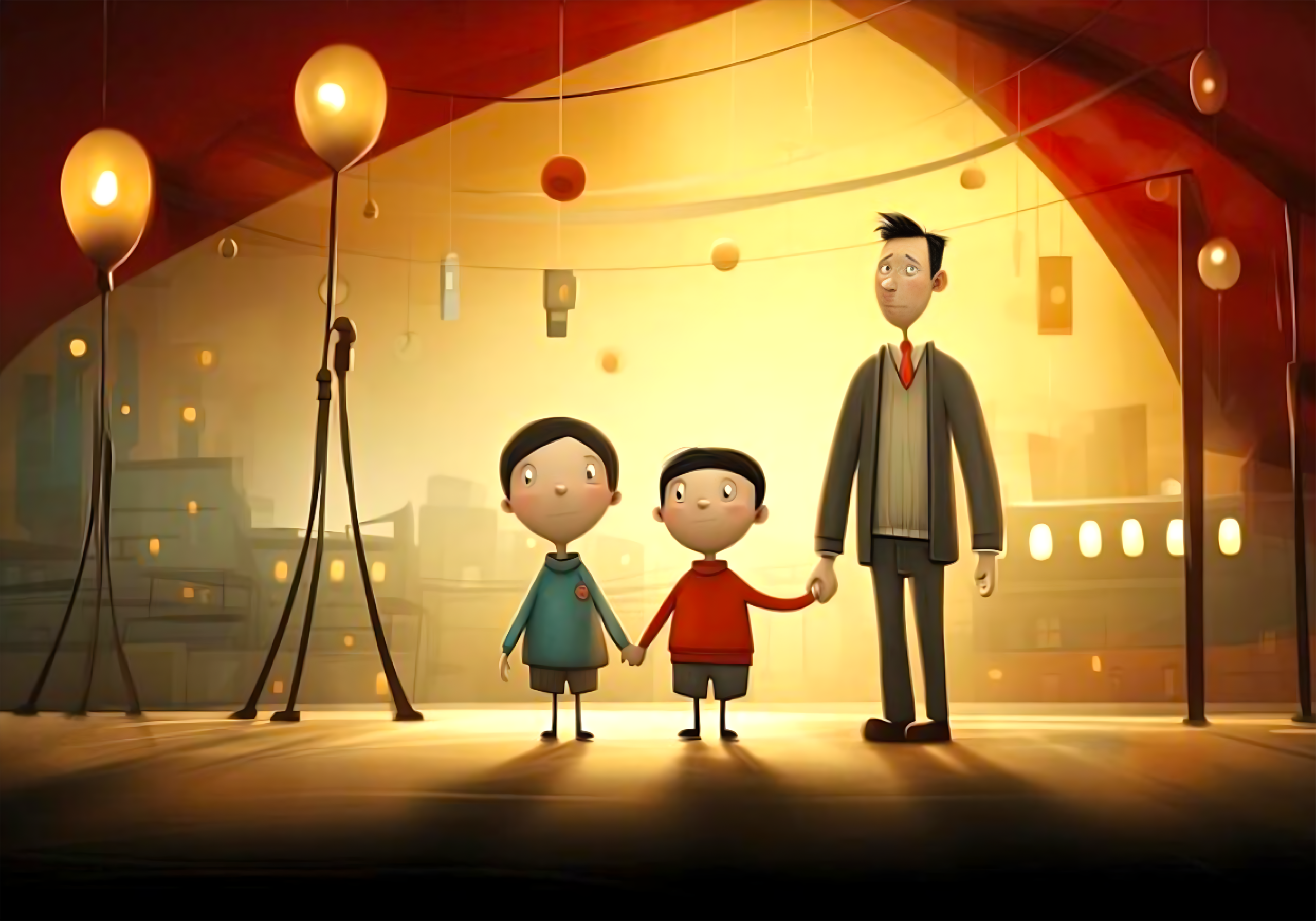
The First Taste of Applause
There is something specific that happens when a child performs and the audience responds.
It’s not vanity, it’s recognition. For children who struggle to feel seen in ordinary school and social settings, a stage that responds to them with laughter, silence, or applause can feel like a profound and unusual kind of belonging. Child acting can function, at its best, as a place where a child discovers they have something worth offering.
The first taste of applause isn’t just ego gratification. For many children, it’s the first experience of genuine connection between something they created and an audience that received it. That’s a meaningful and specific feeling, and it’s not surprising that children want more of it.
How Most Kids Actually Get Discovered
The mythology of discovery, the talent scout in a shopping mall, the agent who spots the perfect face, is mostly that: mythology. The realistic pathway into child acting runs through school drama departments, community theatre programs, local talent competitions, and parents who seek out reputable agencies after noticing genuine interest and aptitude in their child. In India, regional theatres, reality television competitions, and industry connections remain the primary entry points. In the United States and United Kingdom, casting for roles is largely conducted through registered talent agencies working with established productions.
The children who find their way in are rarely those who are groomed for it from birth. They’re more often children who were given an opportunity to try something, responded to it intensely, and had adults around them who took that response seriously enough to investigate further.
What Actually Keeps Young Actors in the Industry
Loving the Craft Versus Chasing the Praise
The distinction between these two things is easy to miss from the outside and crucial from the inside. A child who loves child acting because of what they get from it, the attention, the praise, the fame, the novelty, is building on a foundation that will shift. Children change. The kind of child roles available to a 9-year-old are not available to a 13-year-old.
A child who loves the craft itself is building on something more durable. External validation matters too, for everyone in any creative field. The child actors who continue working into adult careers are overwhelmingly those for whom the doing itself is the reward, alongside the outcome rather than instead of it.
The Family Dynamic Behind Every Long Career
The research on child actors is consistent on this point: family environment is a stronger predictor of long-term wellbeing than talent, opportunity, or early success. A study reviewing the psychological wellbeing of child actors found that children who maintained stable, grounded family lives characterized by consistent routines, clear boundaries, and parents who prioritized the child’s overall development over career advancement were significantly more likely to navigate the industry without serious psychological harm.
One of the best exmaples would be Emma Watson. Throughout the decade she spent in the famous Harry Potter films, her parents and she herself consistently prioritized education and maintained ordinary friendships alongside the work. She went on to pursue and earn a degree in Brown University.

Building a Sense of Self Outside the Role
A child actor who is only an actor is in a fragile position. Identity development is the central psychological task of childhood and adolescence, and for children in the industry, that process is constantly interrupted and complicated by external definitions of who they are. A child who plays the same character for years risks developing a self-concept inseparable from that role. When the role ends, as it always eventually does, the identity question becomes acute.
Children who are actively encouraged to maintain interests, friendships, and identities outside their acting work are better protected. It sounds obvious. In practice, it requires deliberate effort from parents who are often navigating the demands of a career alongside the demands of raising a person.
Why Mentors and Acting Communities Matter More Than Talent
Talent gets a child into a room. What happens in that room, and in the training environment around it, determines what becomes of it. Experienced acting teachers, drama coaches, and community theatre directors who work well with young performers provide something that raw talent cannot provide for itself: a framework for understanding and developing the craft.
Child acting communities, when they function well, also offer peer relationships of unusual depth. Young people who are all engaged in the same demanding creative work develop a particular kind of mutual understanding. The lasting careers in child acting are disproportionately connected to serious training environments rather than to the quantity of early auditions.
Why So Many Kids Walk Away From Acting
The Typecasting and Rejection Cycle
The numbers are stark. According to data from multiple sources tracking child star careers, approximately 70% of child actors leave the industry before the age of 25. Rejection is, by an enormous margin, the most common experience in child acting. The ratio of auditions to bookings is brutal. A working child actor books perhaps one role for every twenty to thirty auditions attended. Many children work through dozens of auditions without booking anything at all.
Typecasting is the second mechanism of exit. A child who is cast repeatedly as one type, the cute one, the funny one, the serious one, finds that as they grow and change, that type no longer fits them. Mara Wilson, who starred in Mrs. Doubtfire and Matilda, spoke publicly about exactly this: as she moved into adolescence, the roles that had been available to her as a child disappeared, and the roles available to young women required either conforming to industry beauty standards she didn’t meet or accepting extremely limited opportunities. She stepped away at 13 and went on to build a career as a writer.
What Gets Lost: A Normal Childhood
Child acting frequently requires missing things that are, developmentally speaking, not trivial. School plays and friendships built over years. Spontaneous weekends. The particular freedom of not having professional obligations. Research on children in the industry notes a pattern of what one researcher called being “simultaneously overdeveloped and underdeveloped”: handling professional situations and adult environments with ease while lacking basic life skills and peer relationships their age group takes for granted.
This is one of the honest things worth saying about child acting: the cost is real, and it is paid in childhood experiences that cannot be recovered. Whether that cost is worth it depends entirely on the individual child, the specific context, and the nature of the support around them. It is a question families need to take seriously rather than romanticize.
When Passion Turns Into Pressure
A child who begins acting because they love it and continues acting because they feel they cannot stop is in a different situation than it might appear from the outside. The pressure to maintain a career, protect an income, or fulfill a parent’s aspirations is a different kind of fuel than genuine creative passion, and it burns the child differently.
Growing Up on Camera and Changing Roles
The physical reality of growing up ends child acting careers at a rate that no amount of talent or ambition can prevent. Roles written for children require children. Jeff Cohen, who played Chunk in The Goonies, described his career slowing down as puberty changed his appearance. The industry is transparent about this in a way that feels particularly harsh: the child actor is valued for a specific version of themselves that they are in the process of outgrowing the moment they book the role.

Final Thoughts
Child acting is one of those rare pursuits where the entrance looks glamorous, the middle is largely invisible, and the exit is often complicated. Most children who try it will not build lasting careers in it, and that is entirely fine. The research on arts participation in childhood is clear: involvement in drama, performance, and creative work has genuine developmental benefits that persist regardless of whether a professional career follows.
What stays with children who act, whether they continue or walk away, is the specific experience of having learned to be present, to listen, to inhabit a perspective that isn’t their own, and to make something with other people that didn’t exist before. Those are not small things. They are, arguably, the real point. The career, if it comes, is what happens after the child learns to love the work itself.
If your child has that love, protect it carefully. The industry will try to reshape it into something more convenient for its own purposes. The families who manage this well are the ones who keep the child’s relationship with the craft at the center of every decision they make about it.

1 Comment
[…] Child Acting: Why Kids Fall in Love With the Stage and What Decides If They Stay […]