
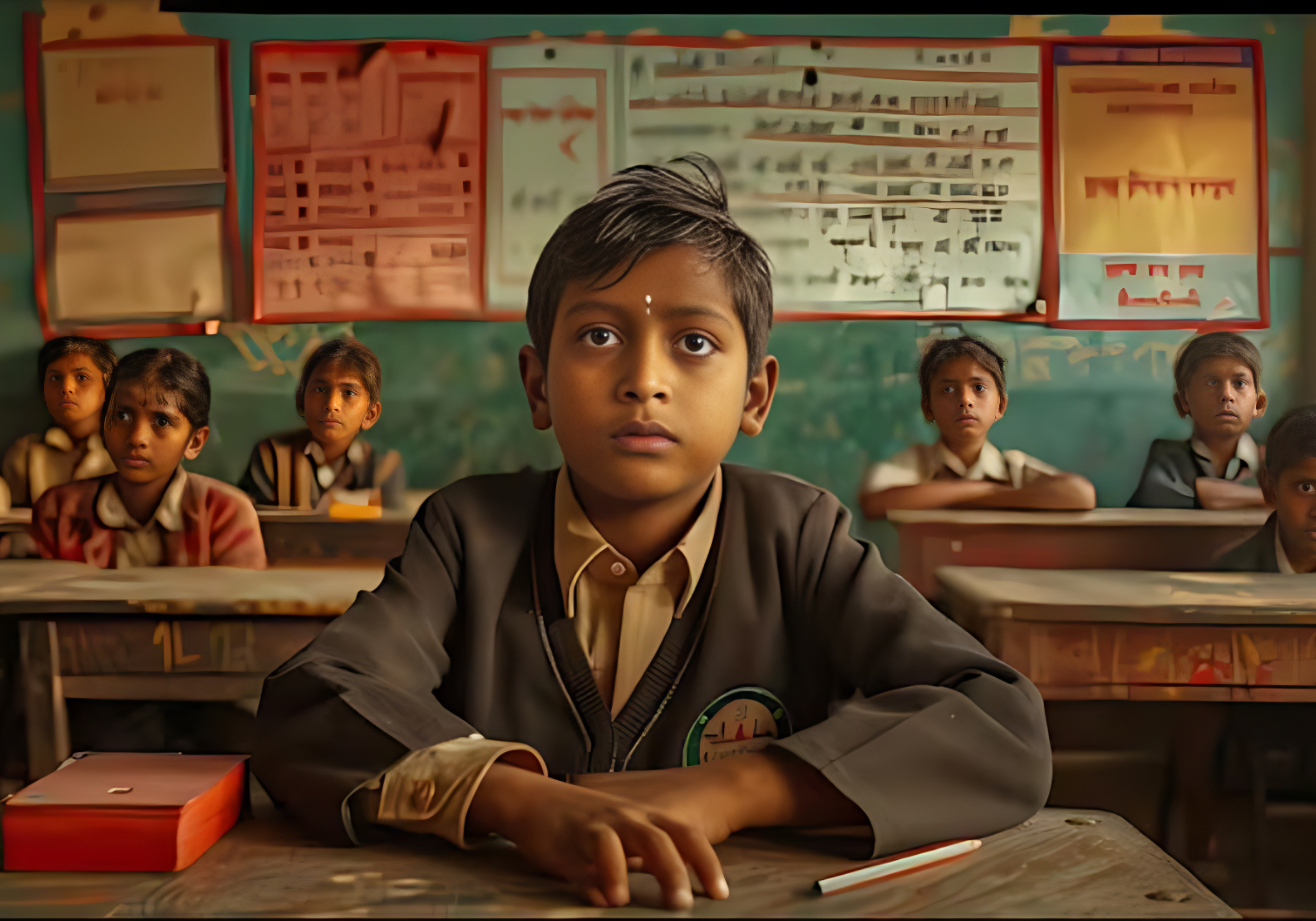
India sends 250 million to school every day. It has one of the largest education networks in the world. Enrollment has touched 98.2% at the primary level. On paper, that sounds like a success story.
But enrolling and learning are two completely different things. The problems in Indian education system 2026 make that gap painfully clear. And if we keep measuring progress by how many children sit inside a classroom rather than by how much they actually learn, we will keep celebrating the wrong thing.
The Problems in Indian Education System 2026 That Nobody Wants to Talk About
We’re Teaching Children to Memorise, Not Think
The most stubborn of all the problems in Indian education system 2026 is rote learning. The 2024 ASER report found that 48% of Grade 5 students cannot read a Grade 2 level text. Children are passing exams and failing at basic comprehension. They recite formulae they cannot explain. They memorise answers to questions they don’t understand. Among all the problems in Indian education system 2026, this is the one that hollows out everything else, because a child who cannot read or reason will struggle no matter how many exams they pass.
Walk into a government school in rural Madhya Pradesh or Jharkhand and you will likely see a teacher reading from a textbook while students copy sentences into notebooks. No discussion. No questions. No connection to anything real. The child goes home, memorises what they wrote, and repeats it in an exam. They pass. They have learned almost nothing that they can actually use.
Even in 2026, experts argue that vocational education and skill-based learning are not adequately integrated, and students often graduate without the practical skills required by the modern economy. The exam is treated as the finish line. Learning is the warm-up lap nobody cares about.
Degrees Without Destinies
One of the biggest challenges facing the Indian education system is that it tends to view degrees and job fitness as the same thing. Most engineers and management graduates remain unemployed because they lack the industry-specific skills that would have helped them get a job.
This is one of the problems in the Indian education system 2026. You spend four years studying, take on enormous pressure, and come out the other side without the actual skills employers want. The problem is the curriculum hasn’t caught up with the economy, and nobody is in a hurry to fix it.
India produces over 1.5 million engineering graduates every year. A significant percentage of them struggle to find work relevant to their degree. The degree happened, but the education, in the sense of real preparation for the real world, often didn’t.
The Rural-Urban Divide Is Getting Worse
Only 57% of schools have functional computer labs, and 65% of rural students lack digital access. While urban kids learn to code, rural classrooms are still sharing a single textbook between 50 students. Thousands of rural schools continue to operate with a single teacher handling multiple grades simultaneously, often in a single room.
The problems in Indian education system 2026 are not evenly distributed. A child born in Kerala and a child born in Bihar are not playing the same game. Kerala’s literacy rate is above 96%. Bihar’s is around 74%. That gap is not a coincidence; it is the result of decades of unequal investment, political will, and infrastructure.
Geography still determines destiny in this country, and the education system is a large part of the reason why. As India rushes to build a digital economy, it cannot afford to leave 65% of rural children without reliable digital access.
Girls Are Still Dropping Out
About 29% of girls drop out before completing elementary education due to the absence of functional toilets, menstrual stigma, or pressure to marry early. This is one of the problems in Indian education system 2026 that has been on every government report for two decades and remains stubbornly present.
When problems in Indian education system 2026 affect girls disproportionately, the consequences ripple outward for generations. An educated girl is more likely to delay marriage, have fewer children, earn her own income, and send her own children to school. Dropping out at age 12 starts a different chain entirely. Every girl who leaves school early is a future that is quietly cancelled before it begins.
The Pressure Is Breaking Children
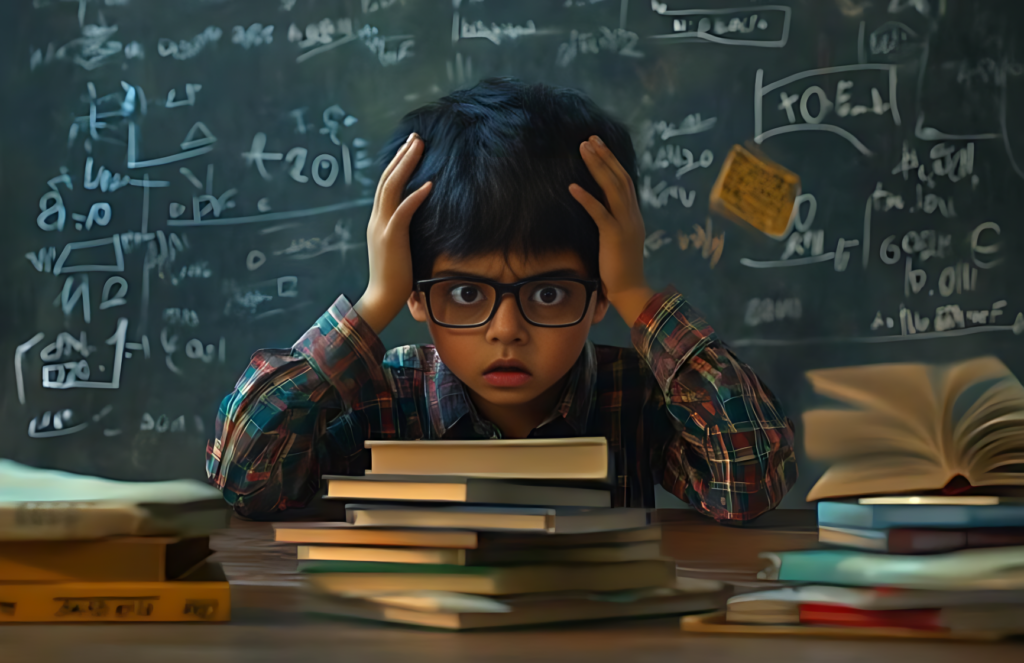
Parents don’t think that asking for a certain grade puts pressure on students. They think it’s a minimum benchmark that the child has to meet. In reality, this fosters a culture of pressure and a rat race to meet parents’ expectations that produces anxiety, not learning.
The problems in Indian education system 2026 are not only institutional; they live inside homes, inside the question “kitne marks aaye?” asked before “how are you?” The pressure to score has replaced the permission to learn. Burnout among school-going children in India is rising, and it is happening earlier. Children as young as ten describe being afraid of exams in ways that go well beyond healthy motivation. A system that produces fear instead of curiosity has lost sight of what education is actually for.
Teachers Are Undervalued and Undertrained
No conversation about the problems in Indian education system 2026 is complete without looking at the teachers. India has a significant teacher vacancy problem at the government school level, particularly in rural areas. Many teachers who are present lack adequate training or support to teach effectively. Teacher absenteeism in government schools has been a documented issue for years. And the ones who show up regularly, who genuinely care about their students, often do so without proper teaching aids, infrastructure, or institutional support.
When a teacher is responsible for 60 students in a single classroom, differentiated learning becomes impossible. When teacher salaries and career growth opportunities remain uncompetitive, the profession stops attracting the calibre of people who could transform it. Fixing the problems in Indian education system 2026 without fixing how India values and trains its teachers is like patching a leaking roof with paper.

What Needs to Happen
Access alone is no longer the problem. Quality is.
India needs to stop measuring success by enrollment figures and start measuring it by what children can actually do with what they have learnt. The problems in Indian education system 2026 require curriculum reform that values thinking over testing, teacher training that is taken seriously and funded properly, digital access that reaches every rural classroom, and a cultural shift that lets children learn without the constant threat of failing to meet someone else’s expectations.
The problems in Indian education system 2026 will not fix themselves. They are structural, cultural, and political all at once. And structural problems can be solved, if we are honest enough to name them and committed enough to fix them. The first step is admitting that the problems in Indian education system 2026 belong to all of us, not just the children sitting in broken classrooms waiting for a system that is supposed to serve them.
You may also read: Choosing the Brick Kiln Over Classroom: Child Labour in 2026