
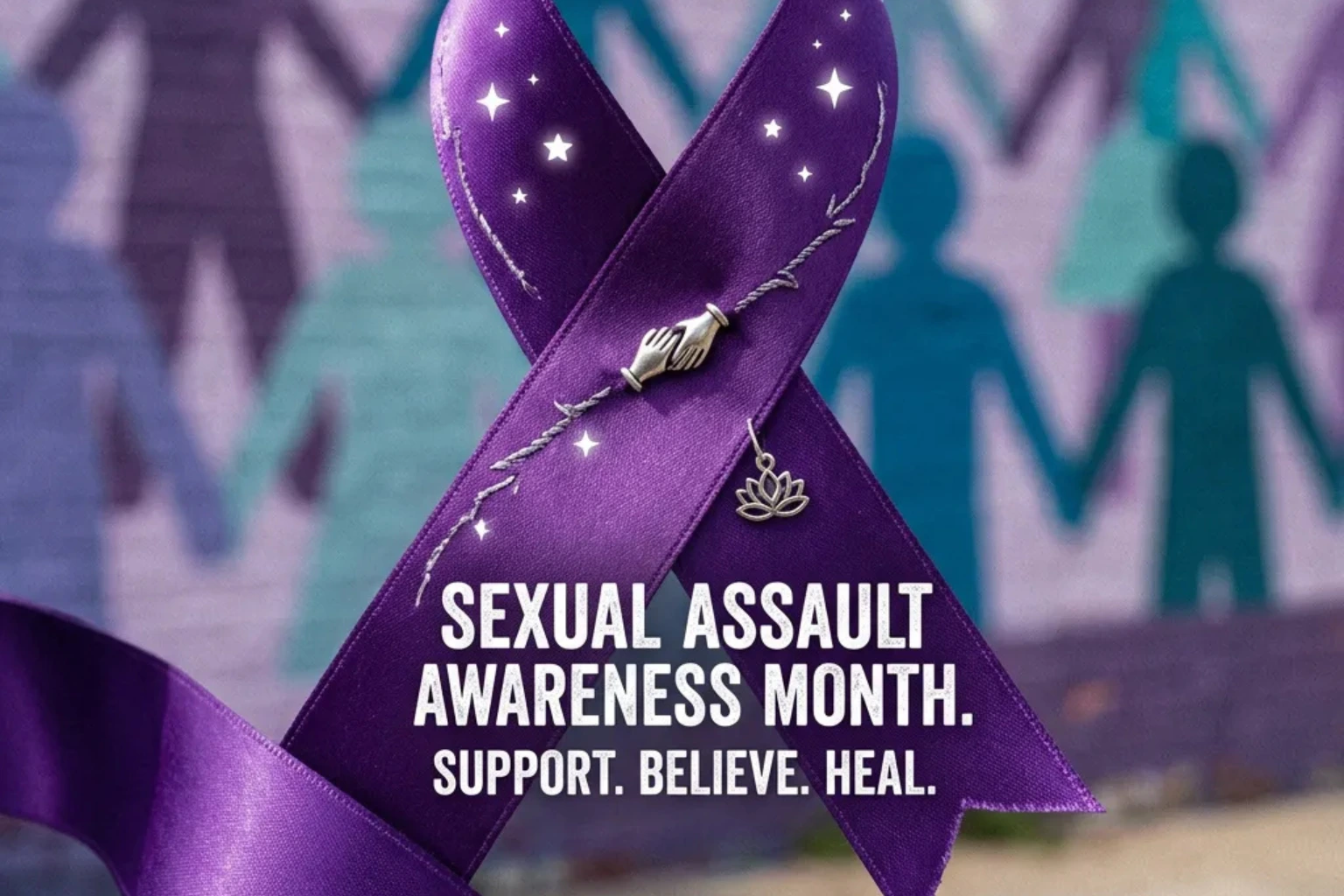
Every April, people globally observe Sexual Assault Awareness Month. This year, 2026, marks something special: the 25th anniversary of this important campaign. But what does this month really mean? And why should you care?
The Harsh Reality
Let me start with some hard truths: why Sexual Assault Awareness is important:
- In India, 86 rape cases are reported every single day; that’s one rape reported every 16 minutes.
- In 2022 alone, over 31,000 rape cases were registered across the country.
- The saddest part is that in 94% of those cases, the victim knew their attacker. The greatest danger doesn’t only come from strangers in dark alleys, it comes from people we know as well – family members, friends, partners, colleagues, etc.
But even these alarming numbers don’t tell the complete story. They only reflect reported cases. Behind every statistic is a person who found the courage to come forward, and for every person who reports, there are countless others who stay silent. According to the National Family Health Survey, 32% of married women in India have experienced physical, sexual, or emotional violence by their spouses. That’s nearly one in three married women. Yet marital rape isn’t even recognized as a crime in India.
Sexual Assault Awareness Month exists because sexual violence is not just a crime statistic. It’s a crisis that affects real people. Over 53% of women and 29% of men have experienced some form of sexual violence in their lives. Among children, over 47,000 cases were reported under the POCSO Act in 2021. Each of these numbers is our daughters, sons, sisters, brothers, and friends.
The Sad Truth about Survivors
Sadly, most cases go unreported because victims fear judgment, humiliation, and retaliation. They worry they won’t be believed or be thought of as attention-seeking. And sadly, they’re often right to worry. In India, only about 27% of rape cases even result in charge sheets being filed, but the conviction rate is only 28.6%. This means that only 1 in 4 reported rape cases ends in a conviction. The average case takes 4 years to resolve. Many survivors look at these numbers and think: what even is the point of going to the police then??
The justice system itself often fails survivors. Over 10,000 cases of sexual violence resulted in acquittals in 2021 due to a lack of evidence. Compensation was awarded in only 20% of cases under the Victim Compensation Scheme. When survivors do come forward, they often face secondary trauma rising from:
- Invasive questioning
- Character assassination in court and,
- A system that seems more interested in finding reasons to disbelieve them rather than helping them.
This is exactly why Sexual Assault Awareness Month matters. Sexual Assault Awareness isn’t about knowing the statistics. It’s about changing the culture that allows this violence to continue. It’s about believing survivors. It’s about teaching consent. It’s about understanding that “no means no” and that silence doesn’t mean yes.
The movement started over 25 years ago because survivors and advocates refused to stay silent. They wore teal ribbons as symbols of solidarity. They organized Denim Day, held every last Wednesday of April, to protest the idea that what someone wears could ever justify assault. (This started after an Italian court actually overturned a rape conviction because the victim wore tight jeans, claiming she must have helped remove them.) They created support hotlines. They pushed for better laws.
And things have changed. Sexual Assault Awareness has increased. After high-profile cases like the 2012 Delhi gang rape case, more people started talking openly about sexual violence. Reporting to the police did increase. The #MeToo movement gave voice to countless survivors who had been silent for years. Laws were reformed to protect children and strengthen punishments for offenders. Fast-track courts were established to speed up trials.
Go Beyond Sexual Assault Awareness
Sexual Assault Awareness alone isn’t enough. We need action. Here’s what that looks like:
- If you’re a parent, talk to your children about consent, boundaries, and respect, even when it feels uncomfortable. Education about these topics can’t start in college. It needs to start at home, early. Teach your sons that masculinity isn’t about dominance or control. Teach your daughters that they have the right to say no and that their bodies belong to them alone.
- If you’re a friend or family member, believe survivors when they speak up. Don’t ask what they were wearing or why they were out late. Don’t question their choices or their timeline for reporting. Ask “How can I support you?” instead. Sometimes the most powerful thing you can do is simply listen without judgment.
- If you witness harassment or concerning behavior, don’t just walk away. You can be a bystander who intervenes, whether that means directly confronting the situation (if safe), distracting, or getting help. Research shows that bystander intervention programs are among the most effective prevention strategies we have.
- If you’re an educator or work with young people, create spaces where students feel safe reporting abuse and know they’ll be taken seriously. Implement comprehensive education programs that go beyond just saying “don’t assault people” to actually building skills around healthy relationships, communication, and respect.
And every single one of us needs to challenge rape culture when we see it. When someone makes a joke about sexual assault, speak up. When someone victim-blames, correct them. When you hear “boys will be boys,” remind people that we can teach boys (and all children) to respect others. When songs, movies, or advertisements glorify non-consensual behavior, call it out.
Sexual Assault Awareness Month isn’t just for survivors, though they are at the heart of this movement. It’s for all of us. Because prevention is a shared responsibility, we all have a role to play in creating a world where everyone, regardless of gender, age, or background, can live without fear of sexual violence & it’s possible with the combined forces of Sexual Assault Awareness & its actions.
This April, share information on social media, donate to organizations supporting survivors, and have those uncomfortable conversations. And most importantly, commit to being part of the change every single day.
Because 25 years of Sexual Assault Awareness is powerful. But 25 years of action? That can change everything.