
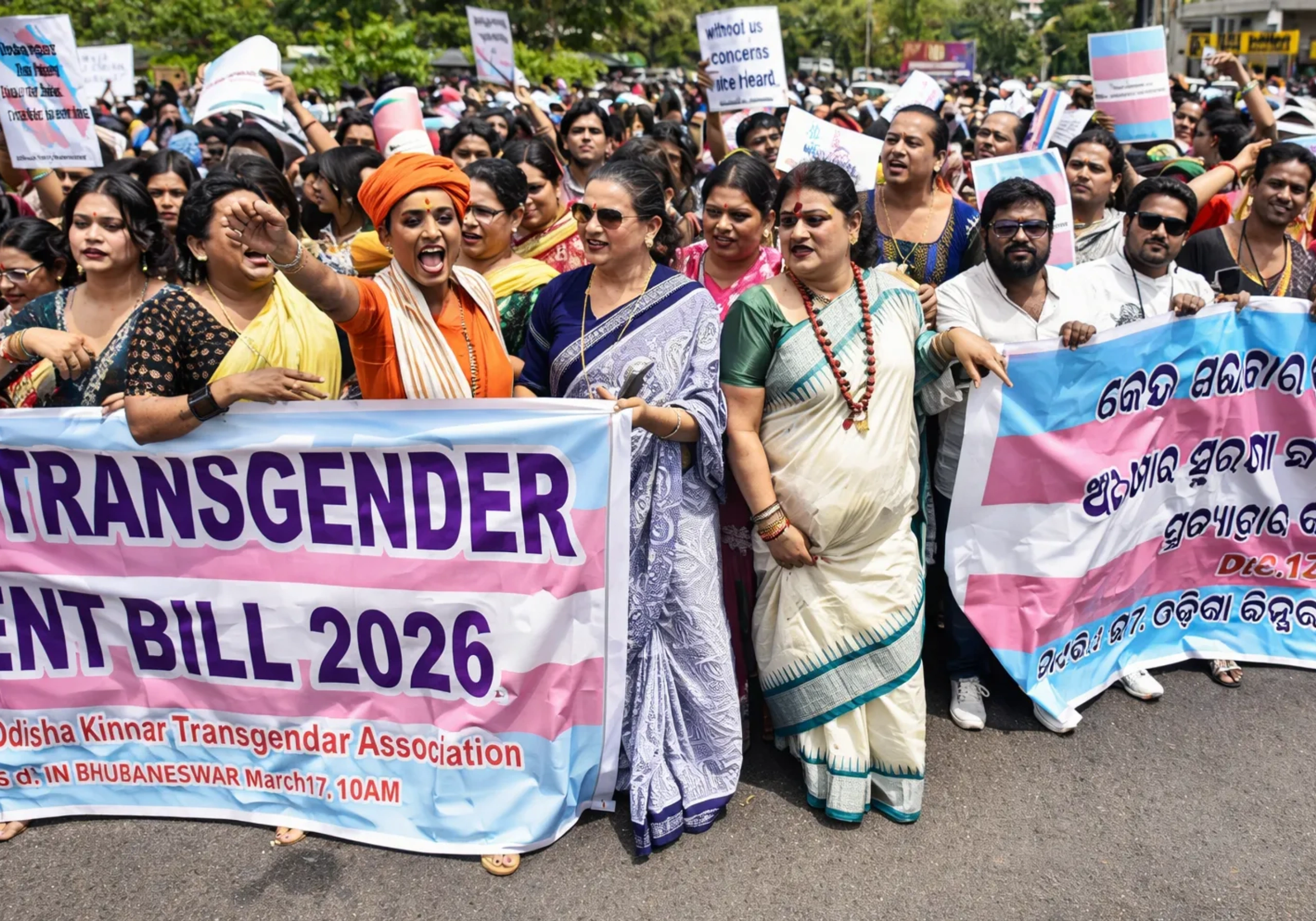
On March 30, 2026, the president of India, Droupadi Murmu, signed the Transgender Persons (Protection of Rights) Amendment Bill into law. The government called it “protection,” but in reality, this is a fundamental betrayal of constitutional values that threatens the very fabric of Indian democracy.
In 2014, the Supreme Court’s NALSA judgement recognized transgenders as the ‘third gender’ and established the right to self-identify gender as a fundamental right protected under Articles 14, 15, 16, 19 (1)(a) and 21 of the Constitution. The Court held that gender identity represents the core of personal identity and is related to personal autonomy and dignity, and that no individual should be compelled to undergo medical procedures as a prerequisite for legal recognition. For the first time, India’s highest court said: ” Your identity is yours, and only yours to define.”
The 2026 amendment destroys this. It replaces self-identification with a system where identity must be verified by a medical board and then recognized by a District Magistrate. To get a certificate recognizing who you are, you now need to convince a panel of government-appointed medical professionals, people who may have zero understanding of gender identity, that you’re “trans enough.”
But the real devastation lies in who gets erased. It lists specific categories:
- People with traditional identities like: hijra, kinner, aravani, or jogta
- “Eunuchs”
- Intersex people and,
- Those forced to become transgender.
So what happens if you’re a trans man? The law doesn’t recognize you. Genderqueer? You don’t exist according to this bill. Trans woman who doesn’t identify with those traditional communities? You’re invisible.
And notice that word “eunuch”? That comes from the Criminal Tribes Act of 1871—a British colonial law designed to criminalize and control marginalized people. We’re using Victorian-era vocabulary, meant to oppress people, in a 2026 law that’s supposed to protect them.
This amendment also creates harsh new punishments with manipulative language. If someone is found guilty of “coercing or alluring” people to be transgender, they could face life in prison. This targets supportive parents helping their trans child, doctors providing medical care, and trans community members who create support networks for young people. The Telangana High Court already ruled that similar laws violate freedom of expression and make stereotypes worse. Yet we’re making it national law anyway.
While other countries are removing barriers for transgender people, India is building new ones:
- We’re forcing people through medical gatekeeping while progressive democracies are eliminating it.
- We’re threatening to jail supportive families while other nations are protecting them.
- We’re erasing identities while the rest of the world increasingly accepts that people know themselves best.
The numbers tell a story, too:
- India’s census counted 487,803 transgender people.
- But only about 32,500 have official identity cards; documents they need for jobs, education, healthcare, and basic services.
Instead of fixing this problem by making the process easier, the government decided to simply pretend most transgender people don’t exist. These aren’t just statistics. These are people who could contribute to India’s economy and society, but we’re pushing them to the margins with bureaucratic barriers.
This harms the entire India, not just transgender people. When the government ignores Supreme Court judgments, dismisses its own advisory committees—two members of the National Council for Transgender Persons resigned in protest—and rejects international human rights standards, it sends a message: no right is truly safe. Amnesty International called this “a serious setback” for human rights. Over 140 lawyers and activists asked the President not to sign it. The government ignored them all.
Here’s what we all need to understand: this isn’t just about transgender people. When the government can override the Supreme Court, ignore experts, and erase whole groups of people with one law, everyone should worry. Today, it’s transgender citizens. Tomorrow, it could be any group that doesn’t fit what the state wants. This is how democracies fall apart, quietly, through erasures disguised as “protection.”
History won’t judge us by what we say about diversity and inclusion. It will judge us by what we do when it matters. The bill is now law, yes. But laws can be challenged in court. They can be changed. The fight for human rights, for the India we claim to be, isn’t over. It’s just gotten more urgent. And we all need to decide: will we stand up for our fellow citizens, or will we stand by and watch their rights disappear?