
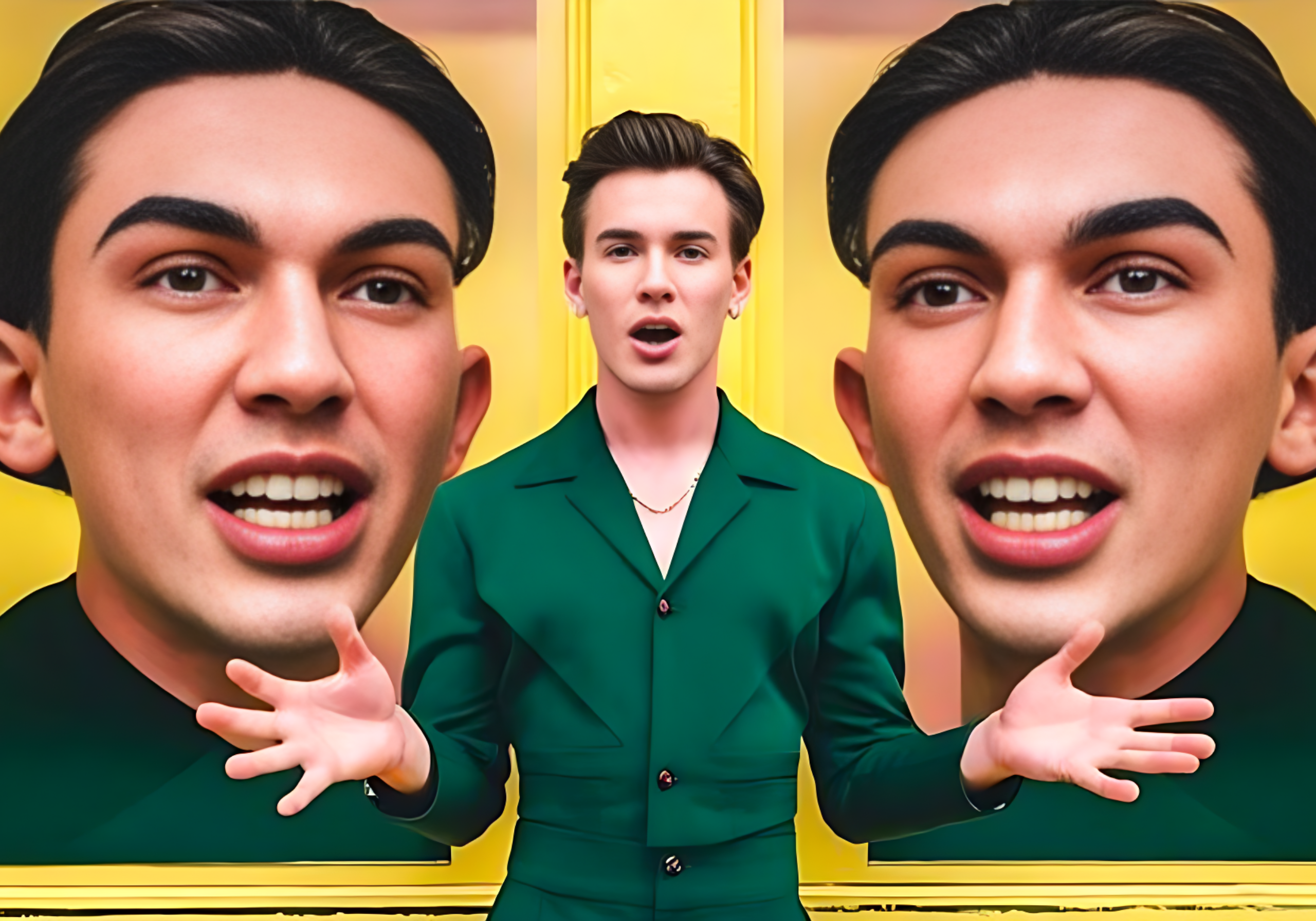
One of the biggest misconceptions about acting for film is that only the director and cinematographer need to understand the camera. Many actors believe their only responsibility is to perform the scene and leave the technical aspects to the crew.
While it is true that acting comes first, understanding how the camera sees you can dramatically improve your performance.
You do not need to become a cinematographer to be a great actor, but you should know what each shot size is designed to capture. The camera is your audience, and every lens tells the story differently.
Knowing whether you are in a close-up or a wide shot helps you make choices that support the story instead of working against it.
What’s a wide shot?
A wide shot captures the actor within their environment. The audience is not only watching your face; they are observing your posture, movement, relationships with other characters, and the space around you.
In a wide shot, your body becomes an important storytelling tool. The way you stand, walk, hesitate, or interact with your surroundings communicates just as much as your dialogue.
A character’s confidence may be revealed by the way they occupy space, while fear might be shown through cautious movement or physical distance from another character.
This does not mean your acting should become exaggerated. It means you should be conscious that the audience is reading your entire body. Every movement has meaning, and unnecessary gestures become more noticeable because the audience can see everything.
Wide shots are often used to establish location, relationships between characters, or moments where physical action is more important than facial expression. As an actor, this is your opportunity to use movement with intention.
What’s a Medium Shot?
Many conversations in film are captured in medium shots because they provide a balance between body language and facial expression.
The audience can still observe your posture, hand movements, and physical interaction while also connecting with your face. For actors, this is often where natural behaviour matters most. Gestures
should feel motivated rather than planned, and movements should arise from genuine thought and emotion.
Because the frame includes both the upper body and face, medium shots allow actors to combine physical performance with emotional subtlety.
What’s a Close-up shot?
If the wide shot captures your body, the close-up captures your mind.
Many actors believe a close-up requires them to “act more,” but the opposite is usually true. The closer the camera moves, the less you need to demonstrate emotion. The audience is close enough to witness genuine thought without unnecessary emphasis.
A close-up magnifies everything. Small eye movements, breathing patterns, muscle tension, and brief moments of hesitation suddenly become powerful storytelling tools. Even a slight glance can reveal conflict, uncertainty, love, fear, or regret.
This is why experienced screen actors often say that the camera records thoughts more than actions.
Instead of trying to show the audience what your character feels, allow yourself to genuinely think and experience the moment. The camera is remarkably sensitive to authentic internal life.
Matching Your Performance to the Frame
One of the most valuable habits an actor can develop is asking, “What shot are we on?”
This is not about changing your character or becoming self-conscious. It is about understanding what information the audience will receive from your performance.
In a wide shot, your physical behaviour may carry much of the storytelling. In a medium shot, both your body and face contribute equally. In a close-up, your inner life becomes the focus, and even the smallest shift in emotion can communicate volumes.
Professional actors learn to adjust without becoming mechanical. The character remains the same, but the way the performance is expressed adapts to the camera’s perspective.
Technical Awareness Supports Creativity
Some actors worry that paying attention to shot sizes will make their performances feel technical or artificial. In reality, the opposite is true.
When you understand what the camera is capturing, you stop wasting energy on details the audience will never see and begin focusing on the moments that matter most. Technical awareness gives you confidence because you know how your work is being translated onto the screen. It also helps you work more effectively with directors, cinematographers, and editors.
Film is a collaborative art form, and actors who understand the filmmaking process become stronger collaborators.
Final Thoughts
Great screen acting is not about performing differently for every shot – it is about understanding what each shot asks of you. The truth of the character never changes. What changes is how much of that truth the audience can see.
A wide shot invites the audience to observe your physical world. A medium shot balances movement with emotion. A close-up invites them into your thoughts.
The more you understand shot sizes, the more confidently you can adapt your performance while remaining truthful. Acting is not only about expressing emotion; it is about communicating effectively through the lens. When you learn how different shots tell different parts of the story, you become not just a better performer, but a more complete filmmaker.
Along with this, you may also read: – learning-never-goes-to-waste
4 Comments
[…] Close-Up, Medium Shot, Wide Shot: The Guide for Actors […]
Your comment is awaiting moderation.
El juego responsable representa un enfoque el cual tiene como objetivo preservar el equilibrio respecto a las apuestas y minimizar los riesgos vinculados con esta actividad.
Requiere fijar restricciones de dinero al momento de comenzar, así como reconocer las alertas de una conducta problemática.
https://www.apkfiles.com/apk-622658/descargar-mobcash-apk-oficial-gesti-n-de-caja-m-vi
Además, fomenta decisiones informadas y busca que la el entretenimiento permanezca el propósito esencial al la actividad.
En definitiva, el juego responsable facilita a los usuarios a conservar la rienda suelta sobre sus hábitos así como a disfrutar el juego de forma segura.
Your comment is awaiting moderation.
La práctica responsable del juego representa una filosofía mediante el cual tiene como objetivo preservar la moderación en las apuestas así como prevenir los problemas relacionados a el juego.
Incluye fijar límites de tiempo previo a empezar a jugar, y también identificar las alertas que indican una conducta problemática.
https://www.apkfiles.com/apk-622658/descargar-mobcash-apk-oficial-gesti-n-de-caja-m-vi
Igualmente, favorece elecciones conscientes y procura que la el esparcimiento permanezca la finalidad central de el juego.
Para decirlo de otro modo, esta práctica ayuda a las personas a conservar la rienda suelta sobre su comportamiento y a vivir el juego de manera segura.
It’s too interesting yaa… Actually, I never found this many details in small things ever before. Now whenever i will watch any movies or web series I will surely try to find out the shot differences in them!
“Behad sateek aur zaroori baat! Log aksar sochte hain ki acting sirf lines bolna hai, par screen acting mein frame ki samajh hona sabse bada asset hai. ‘Wide shot captures the body, close-up captures the mind’—yeh line poore article ka nichod hai. Jab ek actor ko pata hota hai ki camera usse kya maang raha hai, toh performance mechanical nahi balki aur zyada impactful ho jaati hai. Brilliant breakdown!”
“Aapka favorite shot size kaun sa hai jahan aapko perform karne mein sabse zyada maza aata hai?”
Before reading this, I thought a camera was just recording what was happening. I didn’t know different shot sizes could tell a story in different ways. The examples made it very easy to understand. Thanks for sharing this knowledge.