
If I’m being fully honest (as an actress), not everyone has a scene partner on speed dial. Sometimes, it’s 11 PM and there’s an audition due in the morning, and you’re sitting alone in your room wondering if you can actually pull this off. The good news is that you absolutely can. How to self tape an audition without a reader is one of the most useful skills a budding actor should know, and this guide will walk you through exactly on how to do it.
Can I Self-Tape Without a Reader?
Yes, definitely. The question of how to self-tape an audition without a reader comes up constantly in acting communities, and the answer is always the same: casting directors care about your performance more than whether someone is reading lines back at you. What matters is that your reactions feel real, your eye line is right, and the tape is technically clean. All of that is achievable on your own.
Setting Up Your Space
When you figure out how to self tape an audition without a reader, your setup will come into play a lot. A bad background or poor lighting costs you before you open your mouth.
- Background: Plain wall, clean and uncluttered. Neutral colours work best. No busy patterns, no laundry hanging in the corner.
- Lighting: Natural light from a window in front of you is ideal. If you’re shooting at night, a ring light or a lamp pointing at your face (not behind you) will do the job.
- Camera: Your smartphone is absolutely fine. Prop it up at eye level. Eye level matters more than most people realise.
- Sound: Record somewhere quiet. Even a small amount of echo or background noise makes a tape feel amateur.
The technical decisions you make before pressing record matter more than most people expect.
How to Self-Tape by Yourself: The Eye Line Fix
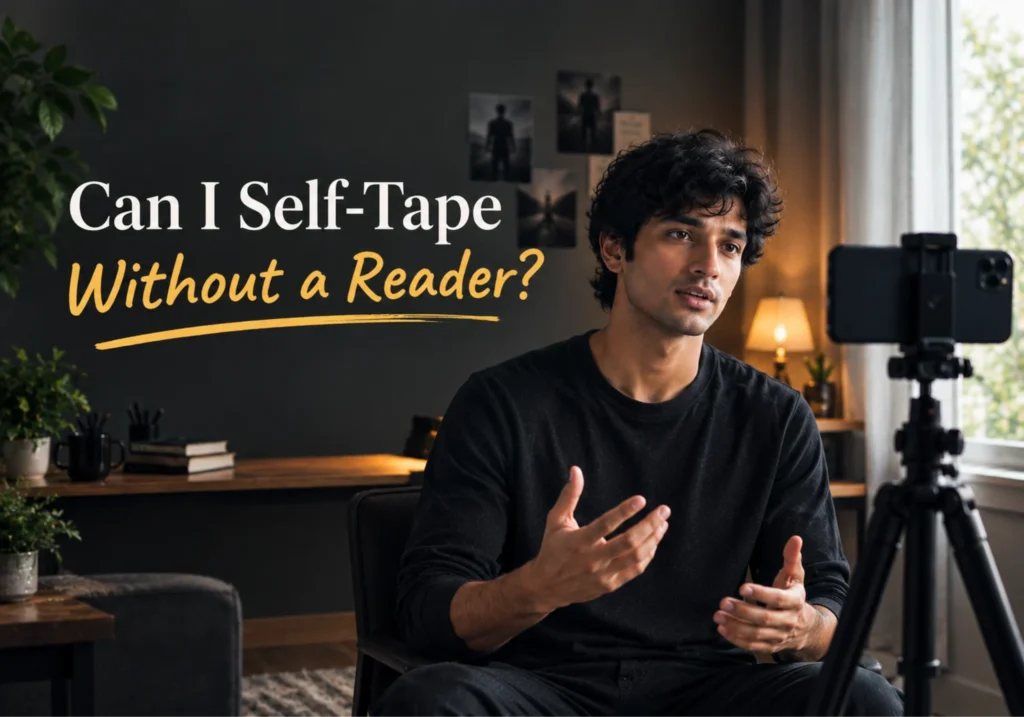
The biggest challenge in how to self tape an audition without a reader is the eye line. Without a person there, your eyes drift, and casting directors notice immediately.
A simple fix I would suggest is to put a small sticker just above your camera lens. That is your scene partner’s eyeline. You can also write the other character’s lines on paper and place it right next to the lens so your eyes barely move when you glance at a cue.
Another option could be to record the other character’s lines in your own voice and play them back through one earphone during your take. For emotional scenes, having something real to respond to makes a significant difference when you are figuring out how to self-tape an audition without a reader alone.
How to Do a Good Self-Tape Audition
Knowing how to self-tape an audition without a reader is one thing. Here is what makes a self-tape actually land:
- Do the work on the material first: No technical trick can fix an unprepared performance. You should know why your character says what they say and know what they want in every movement.
- Do multiple takes: Your first take is rarely your best. You should give yourself 3 or 4 proper attempts and pick the one where you were most present.
- Keep slates short and warm: State your name, the role, and the scene, smile and that’s it. Casting directors watch hundreds of these and prefer short and crisp.
- Check your framing: Your eyebrows to just below your chest is the standard framing for a self-tape. You should neither be too close nor too far.
- Watch it back once before you send: You don’t need to be happy with every moment. You just need to make sure there are no technical disasters and that the performance reads the way you intended.
Is 17 Too Late for Acting?
No. Seventeen is not late at all. If you are asking this while also learning how to self-tape an audition without a reader, that combination already tells you something about your commitment.
According to Wikipedia’s overview of professional acting training, most formal conservatory programmes take actors from age 18 onwards. Many working professionals started in their late teens. Preparation, craft, and persistence matter far more than when you started.
The Three Things Casting Directors Actually Notice
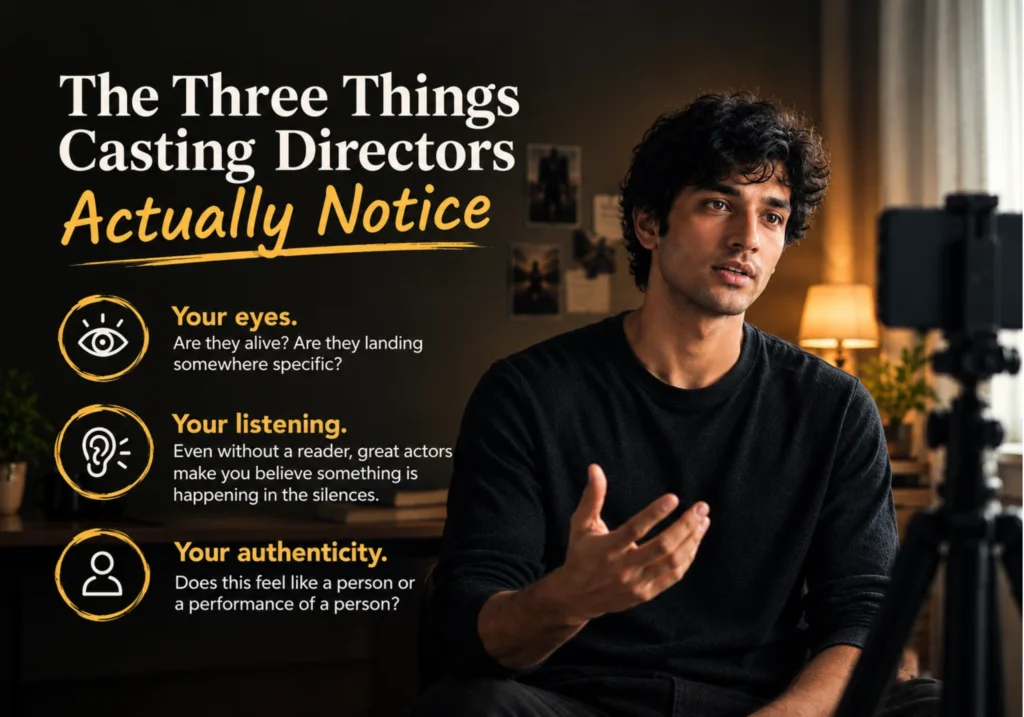
Audition coaches and industry professionals who teach how to self-tape an audition without a reader consistently point to the same three things:
- Your eyes. Are they alive? Are they landing somewhere specific?
- Your listening. Even without a reader, great actors make you believe something is happening in the silences.
- Your authenticity. Does this feel like a person or a performance of a person?
Everything else, the production quality, the perfect slate, the ring light, all of it supports these three things. It does not replace them.
Sending It Off
Name your file clearly: Your Name, Role, Project. Most casting platforms accept MP4 files. If emailing directly, use a download link. Mastering how to self-tape an audition without a reader means the sending part should feel routine, not stressful.
Knowing how to self-tape an audition without a reader well enough to send something clean and confident is a genuine professional skill. It puts the audition process entirely in your hands, and removes one of the biggest logistical barriers holding actors back from submitting consistently.
That is exactly where it should be. Once you know how to self-tape an audition without a reader properly, the process stops feeling like a problem and starts feeling like an advantage.