
Today I caught up with a group of friends, and what started as a casual conversation turned into one of those discussions that really gets you thinking.
Two of my friends, who are married to each other, went to a store to buy a razor. Both products perform the same function, made from similar materials and are made by the same brand. The only noticeable difference is that one is marketed to men, while the other is packaged in pink and marketed to women. Yet, the women’s version often costs more. So, we got onto the topic of how certain things seem to cost more for women. At first, it was
just the usual complaints – a haircut, a root touch-up, a razor, deodorant, even something as random as a laptop bag. But the more examples we shared, the more we realized there was a bigger issue behind it all: a phenomenon called the Pink Tax.
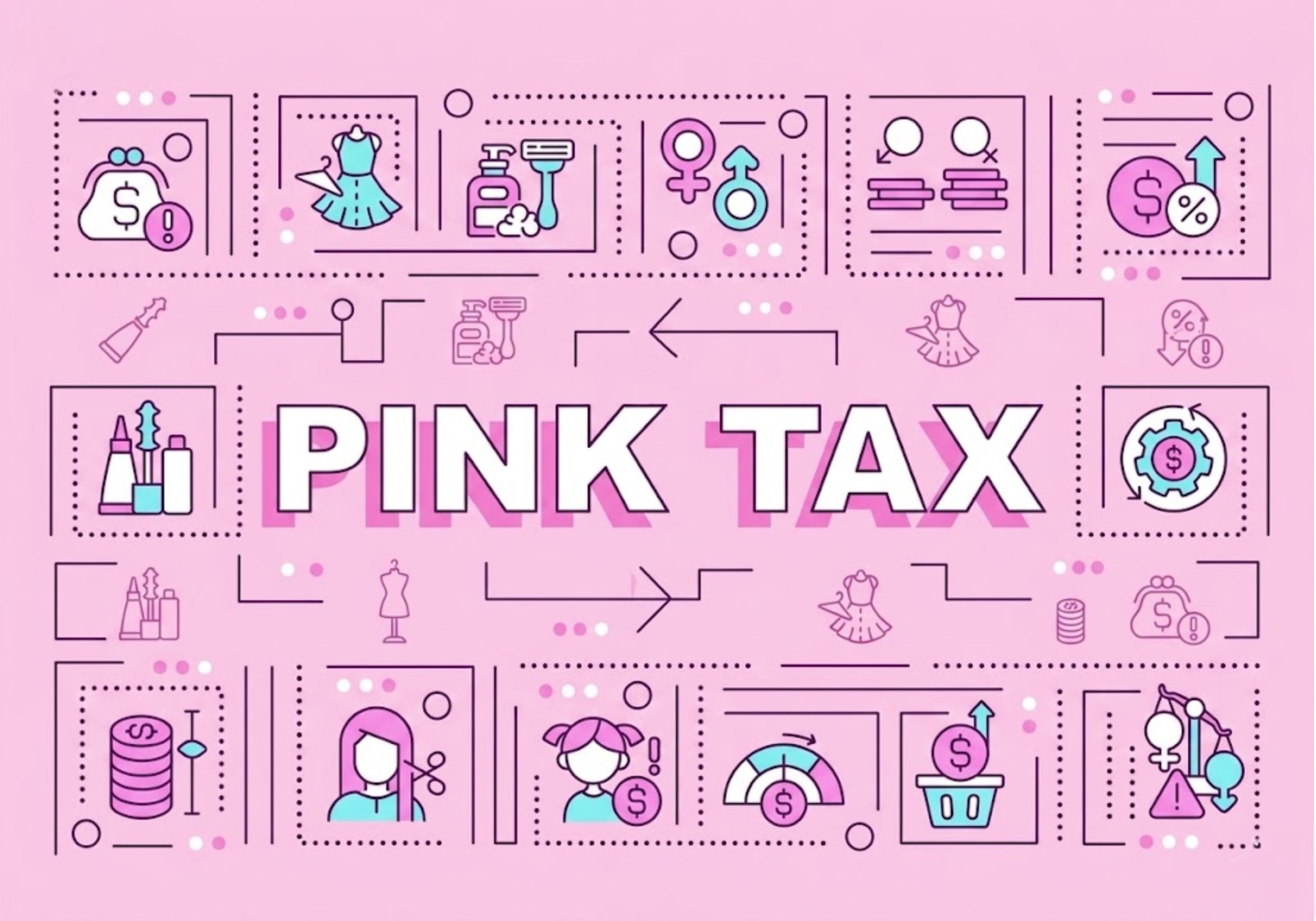
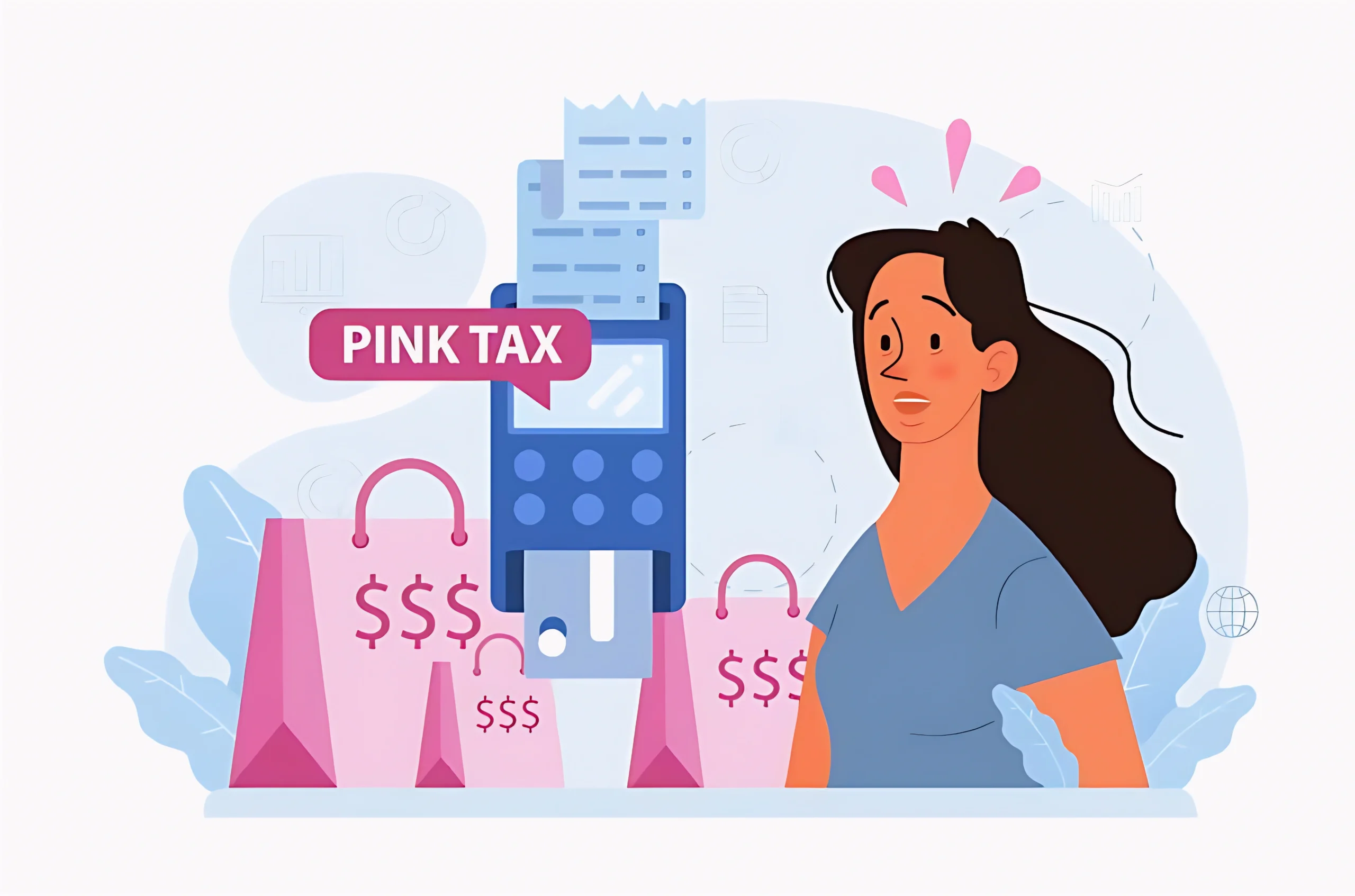
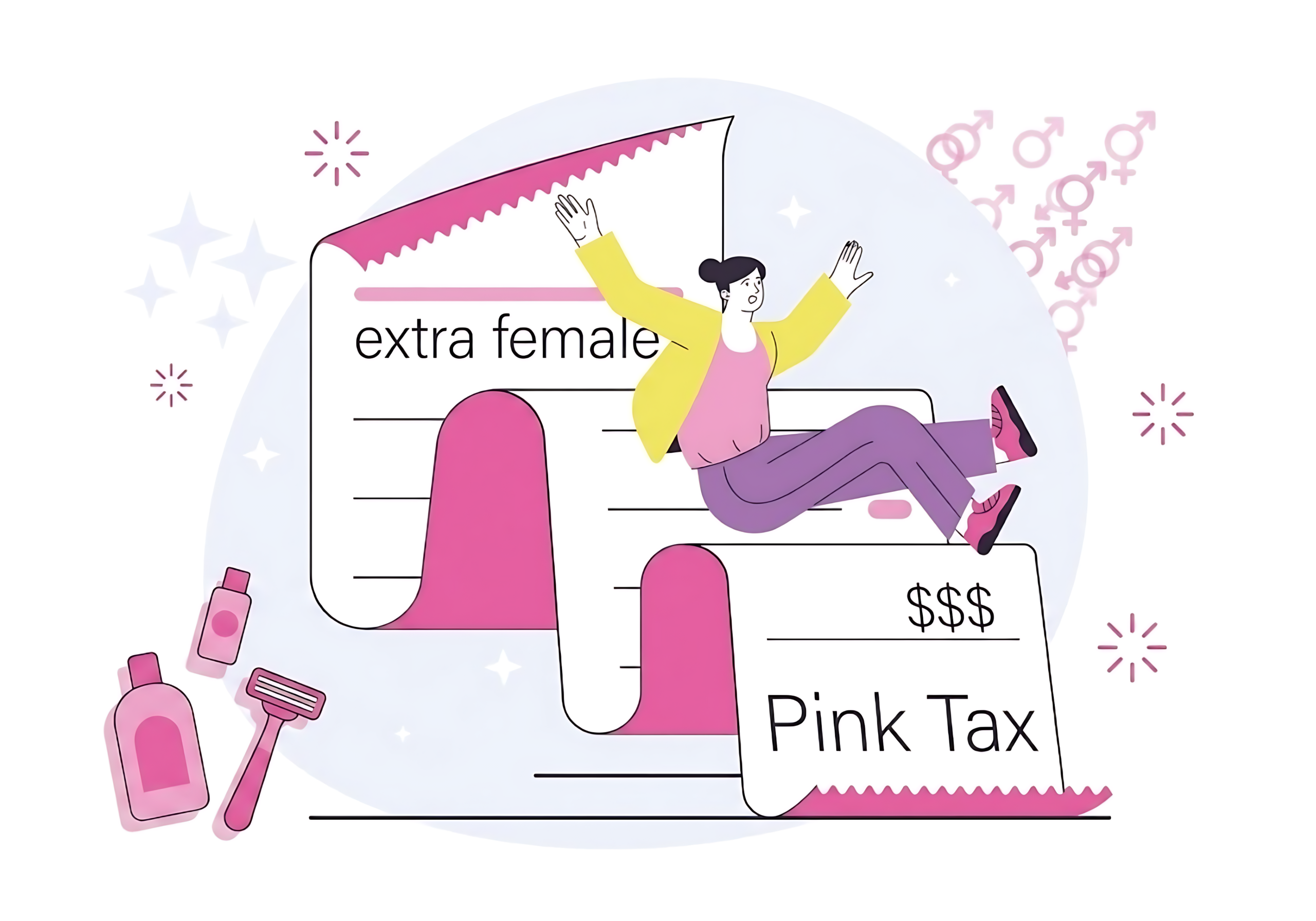
Pink tax is the extra amount women pay for products and services that are functionally identical to those marketed to men. Despite its name, the pink tax is not an actual government tax; it is actually a form of gender-based price disparity that quietly affects everyday purchases, from personal care products and clothing to beauty services and healthcare expenses. This includes razors, deodorants, shampoos, clothing, dry cleaning, health insurance, and financial products. It is embedded in the price of haircuts, gym memberships, and car repairs.
Understanding the pink tax matters because it sits at the intersection of two realities: women earn less than men, and women spend more than men for equivalent goods. The combination is not accidental. It is structural.
What the Pink Tax Actually Looks Like
The pink tax appears in a variety of everyday situations. Some examples are obvious. Others are ones you would never think to question unless someone pointed them out.
Razors and personal care: A pack of blue disposable razors in India might cost Rs 50. The pink version, functionally identical, often sells for Rs 75 or more. A 2015 study by the New York City Department of Consumer and Worker Protection (DCWP) found that personal care products marketed to women cost 13% more than equivalent products for men. Women’s deodorant in the UK was found to be 8.9% more expensive than men’s. Women’s facial moisturizer cost 34.28% more than the male equivalent.
Clothing: Clothing marketed towards girls costs around 4% more than clothing for boys. Clothing for adult women runs approximately 8% more expensive than equivalent clothing for men.
Dry-cleaning and laundry services: A woman’s button-down shirt costs more for laundry than a man’s button-down shirt in most dry cleaning services, despite requiring identical work.
Haircuts: A basic trim at most salons costs significantly more for women. The justification is almost always “longer hair takes more time,” but women with short hair and men with long hair routinely report that this rationale is applied inconsistently based on assumed gender.
Financial products: Car insurance, health insurance, and financial planning services have all been documented to carry gender-based pricing disparities. The GNLU Journal of Law and Economics notes that “contrary to the popular understanding that financial services are gender-neutral,” gender-based pricing exists in this sector as well.
In India specifically, a study using household-level data from 2015 to 2022 published in the Economic and Political Weekly found that the pink tax in India represents a premium of roughly two to six times across different states. Kiran Mazumdar-shaw, Chairperson of Biocon, called this “shameful gender bias.” The LawCrust research puts it plainly: items like disposable razors, deodorants, and face washes for women are priced higher in Indian retail.
Why the Pink Tax Exists: The Uncomfortable Truth
Companies have several standard explanations for why women’s products cost more. They use higher quality ingredients. They invest more in research and development. The packaging costs more. The marketing investment justifies a price differential.
Some of these explanations have occasional validity. The problem is that they are applied universally, across product categories, regardless of whether the actual cost of production differs at all. And when examined product by product, the cost differences rarely justify the price differences.
The deeper explanation is rooted in price elasticity. Market research has consistently shown that women are less price-sensitive than men when purchasing personal care and hygiene products. The general assumption of women being influenced by emotions while purchasing goods and being less price-elastic is a stereotype that the market has built a pricing strategy around. Companies charge more because they have learned they can.
There is also the role of gendered marketing itself. The pink tax is, in part, a product of the pink aisle. Once a product is marketed as “for women” with feminine packaging, colour and fragrance it enters a separate pricing category. The product is differentiated in the consumer’s mind even when the formula inside the bottle is identical. Gendered packaging creates perceived value that does not correspond to actual product value, and the pink tax is the financial consequence of that perception.
The Pink Tax in the Context of the Gender Pay Gap
The pink tax becomes significantly more damaging when placed against the backdrop of the gender pay gap. According to the Global Gender Gap Report, there is a 19% pay disparity between men and women in India, even for equal work. Women in agriculture do 80% of the work and earn considerably less. The United Nations has documented that women globally earn just 77 cents for every dollar men earn. Indian women were earning 28% less than their male counterparts in 2018-19, a figure that worsened during the pandemic.
This means the pink tax operates as a double penalty: women earn less and pay more. The same Economic and Political Weekly study found that in absolute terms, the pink tax translates into an additional payout for women-only households of nearly $300 per year. That is a significant financial burden in a country where the median income is not high and savings margins are thin. Only 23% of Indians are even aware of the term “pink tax” and its economic impact, which means the majority of women paying it have no framework to understand or resist it.
What the Pink Tax Does to Women Beyond Their Wallets
The financial impact of the pink tax is real and significant. Its psychological and social impact is less often discussed, but equally important.
When women pay more for products, the message embedded in that pricing is that their needs are premium, their consumption is a choice, and their bodies require expensive maintenance. The pink tax reinforces the idea that femininity is an upgrade, something that costs extra to perform and maintain. This reinforcement does not sit in isolation. It connects to the broader social expectation that women should invest heavily in their appearance, that this investment is their responsibility, and that the cost of it should fall on them individually.
People’s mental health can be harmed by the financial pressure of adhering to these aesthetic standards, making women more prone to anxiety, social comparison, and financial stress. Women who cannot afford the products that are marketed as necessary for their presentation face social stigma as well as financial strain. The pink tax monetizes gender conformity and extracts a fee from women for simply existing in female bodies in a society with specific expectations of those bodies.
What Is Being Done, and What Still Needs to Happen
Several countries and jurisdictions have taken meaningful steps to address the pink tax. New York State has eliminated the tampon tax. California’s elimination of taxes on both tampons and diapers reduced public revenue by an estimated $55 million per year, a cost the state chose to absorb in recognition of the essential nature of these products. The European Union passed legislation reducing tampon taxes across member states. Australia, Canada, Rwanda, and India have all removed sales taxes on menstrual products.
Some brands have voluntarily adopted gender-neutral pricing. Several razor companies now sell identical products under gender-neutral branding at the same price. Some grooming brands have deliberately refused to create “women’s versions” of their products at higher price points. These are market-driven responses that demonstrate the pink tax is a choice, a pricing strategy that can be reversed.
The United Nations has called on countries worldwide to take steps to eliminate the pink tax to ensure women achieve full and equal participation in the economy. Legal frameworks addressing gender-based pricing discrimination are being discussed in several jurisdictions. In India, there is currently no regulation prohibiting gender-based pricing for private sector goods, which means the pink tax in India continues to operate within a legal vacuum.
What would address the pink tax more effectively, is a combination of regulation, market pressure, and consumer awareness. Regulation that requires transparent pricing justification and prohibits discriminatory pricing
Market pressure from consumers who choose gender-neutral products, compare prices across gendered and non-gendered alternatives, and hold brands accountable publicly. And awareness, because only 23% of Indians currently know what the pink tax is, and awareness is the precondition for every other form of pressure.
The Bottom Line
When a woman paid Rs 30 more for her shampoo, she was paying the pink tax. She was not paying for a better product. She was paying because the bottle was pink. After all, the label said “for women,” and because the market has learned that this is a reliable way to extract additional revenue from female consumers who earn less, save less, and are given fewer economic resources to begin with.
The pink tax is a small injustice repeated across every product category, every service sector and every stage of a woman’s life. Over a lifetime, it adds up to a lot of money and hours spent earning money for things that cost men less. And because it happens in small increments at the checkout counter, it rarely registers as the systemic problem it is.
Recognizing the pink tax is the first step to refusing it. The next step would be demanding that brands, governments, and institutions do better. The cost of being a woman should not include a premium for products that serve the same function as those sold to men. Equality in the market is a modest demand. It is time it was treated as a basic standard.
You may also read:- Minority Stress and Mental Health in LGBTQ+ Communities: An Indian Perspective